
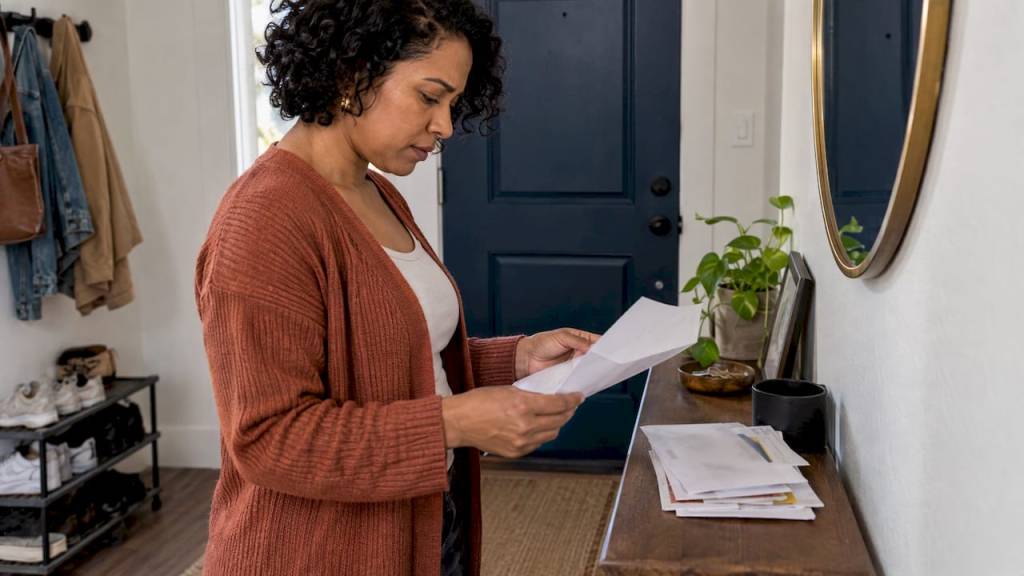
If a creditor keeps calling, suing, garnishing your wages or threatening a shutoff after you filed for bankruptcy, that is likely an automatic stay violation, and federal law gives you ways to make it stop. The fastest route is to document the contact, notify the creditor in writing, and put the problem in the hands of your bankruptcy attorney. At Loayza Law, our bankruptcy practice serves clients in Utah, and a stay violation is one of the issues we want you to bring to us the moment it happens.
TL;DR
- The automatic stay is a court order that takes effect the moment your bankruptcy case is filed. It stops lawsuits, foreclosures, garnishments and most collection activity.
- A creditor that knows about your case and still acts against you can be held liable. Under 11 U.S.C. § 362(k), a person injured by a willful violation recovers actual damages, including costs and attorneys’ fees, and in some cases punitive damages.
- Your first steps: write down every contact, send the creditor written notice with your case number and filing date, and call your bankruptcy attorney.
- Creditors that want to act must ask the court for relief from the stay. They cannot decide for themselves that it no longer applies.
Table of Contents
- What the automatic stay is and when it starts
- What counts as an automatic stay violation
- What to do when a creditor violates the stay
- What you can recover: damages, fees and punishment
- Why timing and notice decide these cases
- Get help with your bankruptcy case
- FAQ
- Sources
What the automatic stay is and when it starts
The United States Courts glossary describes the automatic stay as an injunction that usually comes into force automatically when a bankruptcy case is filed. It stops lawsuits, foreclosures, garnishments and most collection activities against you and the property in your bankruptcy estate. The estate is, in plain terms, everything you own and owe as of the filing date that the bankruptcy covers.
Timing matters. The District of Wyoming bankruptcy court explains that the stay is invoked at the instant the case is filed, and that creditors may not take collection action against you or your property without the bankruptcy court’s approval. A Congressional Research Service primer on bankruptcy (CRS report R45137) adds that the stay is “automatic” because it works without any judge stepping in, and it applies whether or not a given creditor has heard about your petition.
That last point is why violations happen so often. A creditor’s billing system or collection agency may not know about your case for days. But the stay protects you from the first second, which is why notice, covered below, is the key to turning an innocent mistake into a claim.

How long the stay lasts
According to the same CRS primer, the stay generally remains in effect until the court closes the case, dismisses it, or grants a discharge, whichever comes first. If your case is dismissed, the protection ends. For Chapter 13 filers, our guide to what happens after a Chapter 13 dismissal explains how to respond.
Repeat filings change the picture. The District of New Jersey bankruptcy court notes that if a prior case was dismissed within the preceding year, the stay ends on the 30th day after the new filing. If more than one prior case was dismissed within a year, the stay does not take effect at all unless the debtor applies for it. If you have filed before, talk to your attorney before you assume you are protected.

What counts as an automatic stay violation
The rule itself is in 11 U.S.C. § 362(a), the section of the Bankruptcy Code that sets out the stay. It bars creditors from:
- starting or continuing lawsuits and other proceedings against you to collect a debt that existed before you filed;
- enforcing a judgment that was entered before you filed;
- taking or controlling property of your bankruptcy estate;
- creating, perfecting or enforcing a lien (a creditor’s legal claim on your property) on estate property, or on your property to secure an old debt;
- collecting prepetition debts, meaning debts from before the filing, by any means;
- setting off a debt they owe you against a debt you owe them; and
- certain proceedings in the U.S. Tax Court.
A 2026 Practical Law overview summarizes these categories the same way.
Everyday examples
In practice, stay violations usually look like this:
- A collection agency keeps phoning or sending written demands for a debt listed in your bankruptcy.
- Your employer receives a garnishment notice, or your paycheck is still being garnished after you filed.
- A creditor continues a lawsuit or schedules a hearing in state court.
- A lender goes ahead with a foreclosure sale or repossesses a vehicle.
- A bank freezes your account or takes money from it to cover an old debt.
- A utility threatens to shut off service over a balance from before your filing. That was the situation in the 2025 case discussed below.
Exceptions to know about
The stay is broad, not unlimited. The U.S. Courts description of the stay in criminal matters is not the whole story, but one widely cited limit is that the stay does not stop criminal cases against you, including fines or penalties that are not about a debt. Statutory exceptions in § 362(b) cover other situations as well, and a creditor can ask the court for permission to proceed. According to the CRS primer, a creditor that wants to act against you or the estate must usually ask the bankruptcy court to terminate, annul, modify or condition the stay. The Southern District of Florida bankruptcy court says the same: a creditor has the right to ask the court to lift the stay, but violating it is against federal law.
One recent nuance: in City of Chicago v. Fulton, the Supreme Court held that merely holding onto estate property after the filing, without doing anything more, does not violate § 362(a)(3). The 2026 Practical Law overview notes the Court limited that holding to that one subsection. If a creditor is sitting on something of yours, ask your attorney whether the facts amount to an affirmative act.
What to do when a creditor violates the stay
The District of Oregon bankruptcy court gives a clear sequence, and it matches what we would tell any client.
- Write everything down. Record the date, time, caller, what was said and how the contact came in. Keep letters, envelopes, texts, voicemails and screenshots. These become your evidence.
- Notify the creditor in writing. Tell them you filed bankruptcy, and include your case number and filing date, or a copy of the petition. Because willfulness depends on the creditor knowing about the stay, written notice matters. Keep proof that you sent it.
- Call your bankruptcy attorney right away. Do not wait for the next call or the next garnishment. If the creditor keeps collecting after notice, you may ask the court for an order prohibiting further collection and, for willful violations, damages.
- Do not ignore court papers. If you were served with a lawsuit or a notice from a state court, give it to your attorney immediately so the bankruptcy court can be told.
- Do not try to enforce the stay alone. The Oregon court describes this kind of action as complex and says it normally requires a qualified bankruptcy attorney.
If you are still deciding which chapter to file or what a filing will cost, see Chapter 7 vs. Chapter 13 and Utah bankruptcy costs.
What you can recover: damages, fees and punishment
Section 362(k)(1) of the Bankruptcy Code says an individual injured by a willful violation of the stay shall recover actual damages, including costs and attorneys’ fees. In appropriate circumstances, the individual may also recover punitive damages, which are meant to punish especially bad conduct.
What “willful” means
Willful does not mean malicious. The 2026 Practical Law overview explains that the creditor need not intend to break the stay. What must be intentional are the acts that violated it, and the creditor must have known about the stay. A good-faith belief that it was complying is not a defense by itself. The overview also says a defense can exist when the law was genuinely uncertain and the creditor relied in good faith on persuasive legal authority.
The same overview states that you may recover attorneys’ fees and costs even if you cannot show actual damages, and that stay violations are handled by the bankruptcy judge without a jury.
Real awards, so you know the range
These results are from published court decisions. Every case turns on its own facts, and none guarantees what yours will bring.
| Case | What the creditor did | What the court awarded |
|---|---|---|
| In re Minarik (Bankr. E.D. Pa. 2025) | A utility kept sending threatening calls and texts about shutting off electricity after the filing | $20,000 for emotional distress; no punitive damages, because the automated communications were not egregious |
| Johnston v. Sternberg (9th Cir. 2009) | Stay violation that interfered with the debtor’s work and caused distress | $2,883.20 for work interference plus $20,000 for emotional distress affirmed |
| Achterberg v. CTA (E.D. Cal. 2017) | Continuing stay and discharge-injunction violations | $1,250 for extended escrow, $1,850 emotional distress, $18,261.29 attorneys’ fees and costs, and $15,000 punitive damages |
Two lessons stand out. First, emotional distress can be a real part of the award. Second, punitive damages are reserved for serious conduct. The Minarik court weighed the nature of the conduct, the creditor’s ability to pay, its motives and any provocation by the debtor, and found routine automated messages did not qualify. The Achterberg court, applying the Ninth Circuit’s standard of reckless or callous disregard for the law or the rights of others, did award them.
Which attorney fees count
In Johnston v. Sternberg, the Ninth Circuit held that the fees you recover as actual damages are those spent enforcing the stay and fixing the violation. Fees spent afterward to litigate the damages claim itself are not recoverable as actual damages under that decision. Your circuit may treat this differently, which is another reason to have an attorney who knows your court’s rules.
Court procedure can matter too
Local rules sometimes protect your claim. For example, the Middle District of Florida’s Local Rule 4001-1 was amended in 2025 so that if a case is dismissed while a sanctions motion over an alleged stay violation is set for hearing, the court keeps jurisdiction over that motion. Rules like this vary by district, so ask your attorney how your court handles the issue.
Why timing and notice decide these cases
Most successful stay claims share a few features: the debtor can prove the date of filing, can show the creditor knew, and can show what happened afterward. That is why the first week matters so much. A creditor that receives written notice with a case number and keeps going has a hard time arguing it did not act intentionally.
Also remember that violations are not limited to collectors. Landlords, utilities, lenders, employers acting on garnishments, and even courts’ clerks acting on old orders can all be involved. If you hear from anyone about a debt that is in your bankruptcy, treat it the same way: record it, give notice, call your attorney.
Our view: do not wait on a stay violation
We see the automatic stay as the single most important protection a bankruptcy filing gives a family. It is the reason many clients file when they do: the calls stop, the garnishment stops, the sale date stops. When a creditor ignores it, the client is entitled to take that seriously, and so are we.
Our firm has earned the trust of more than 1,300 clients and has solved more than 1,200 cases. Bankruptcy is one of the practice areas we serve in Utah, and we bring the same client-centered approach to it as to everything else we do: clear communication, a plan tailored to your situation, and responsiveness when something goes wrong.
Our advice is simple. Keep your notices, keep a log, and call us as soon as a creditor contacts you after you have filed. A violation is easiest to resolve when it is caught early and documented well.
Paralegal
Get help with your bankruptcy case
If you are filing, already in a case, or facing a creditor that will not stop, our bankruptcy attorneys in Salt Lake City can walk you through the filing and the protections that come with it. Bankruptcy is one of the practice areas listed on our site, alongside immigration, personal injury, workers’ compensation, family law, criminal defense and contract disputes. If you need help in Florida, we also have a Miami bankruptcy page.

Contact us with your case number, the creditor’s name and the notes you have taken. That is enough for us to start.
FAQ
Can I sue a creditor for violating the automatic stay?
Yes, if the violation was willful. Section 362(k)(1) lets an individual injured by a willful violation recover actual damages, including costs and attorneys’ fees, and sometimes punitive damages. The Oregon bankruptcy court notes these actions are complex and normally need a qualified bankruptcy attorney.
Does the stay stop every creditor and every case?
No. It covers most collection actions, but there are exceptions, including criminal proceedings and certain situations listed in § 362(b). Creditors may also ask the court for relief from the stay. If you filed bankruptcy more than once in the past year, the stay may be shorter or may not apply unless you ask the court for it.
What should I do if a creditor calls after I filed?
Note the date, time and what was said, then send written notice with your case number and filing date. Keep proof that you sent it, and contact your bankruptcy attorney. Do not ignore any court papers that arrive.
What if the creditor says it did not know about my case?
That is why written notice matters. Willfulness requires that the creditor knew of the stay and intentionally took the violating act, according to the 2026 Practical Law overview. Once the creditor has your notice and case number, continuing to act is much harder to excuse.
Does the stay protect me forever?
No. It generally lasts until the case is closed, dismissed or a discharge is granted, whichever comes first, per the CRS primer. Your attorney can tell you how long it should last in your chapter and what could end it early.
Sources
- Automatic stay | United States Courts
- What happens when a bankruptcy petition is filed | District of Wyoming Bankruptcy Court
- Bankruptcy Basics: A Primer, CRS R45137 | Congress.gov
- Frequently Asked Questions | District of New Jersey Bankruptcy Court
- 11 U.S.C. § 362, 2024 U.S. Code | govinfo.gov
- Relief from Stay | Southern District of Florida Bankruptcy Court
- Automatic Stay: Overview, 2026
- What can I do if a creditor keeps trying to collect money | District of Oregon Bankruptcy Court
- In re Minarik, Bankr. E.D. Pa. 2025
- Johnston v. Sternberg, Ninth Circuit 2009
- Achterberg v. CTA, E.D. Cal. 2017
- Local Rule 4001-1, Middle District of Florida Bankruptcy Court