
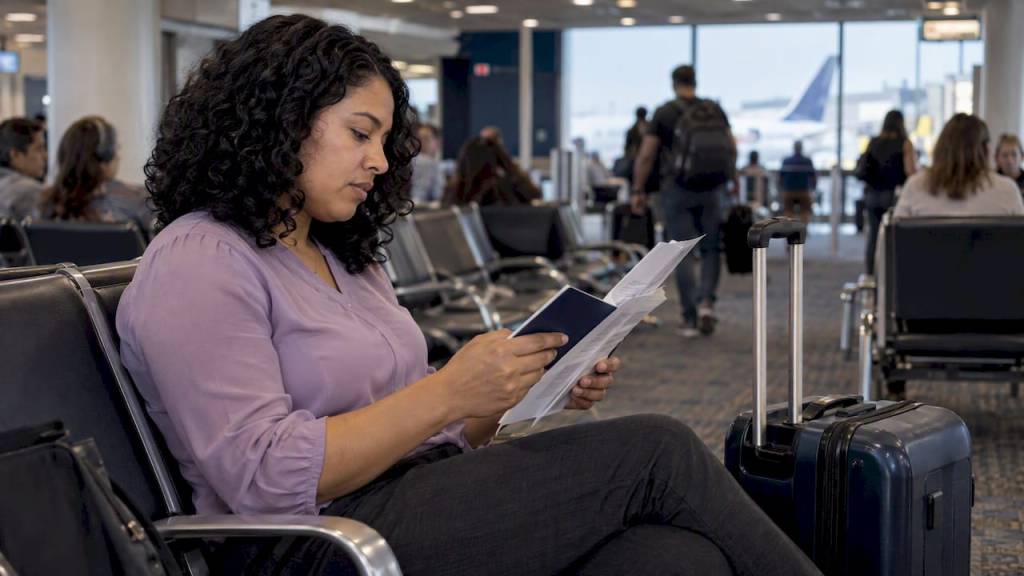
Advance parole is the travel permission that lets a DACA recipient leave the United States and ask to be let back in. It is not a right and not a guarantee. USCIS approves it only for specific reasons, and a border officer still decides at the port of entry. If you hold DACA and are thinking about a trip abroad, read this before you book anything, and speak with an immigration attorney before you leave.
TL;DR
- Once USCIS has approved DACA, you may file Form I-131 to request advance parole. Leaving without it risks being unable to return.
- Approval is generally limited to humanitarian, educational or employment reasons. A vacation is not one of them.
- Advance parole does not guarantee admission. Customs and Border Protection still inspects you at the port of entry.
- Past removal orders, prior unlawful presence issues or a criminal record can change the risk completely. Get individual legal advice before you travel.
Table of Contents
- What advance parole does for a DACA recipient
- Which trips qualify
- How to apply for advance parole with DACA
- How long DACA advance parole takes
- What about the $1,000 parole fee?
- Risks to weigh before you leave
- Our perspective
- Get a file review before you file
- Frequently asked questions
- Sources
What advance parole does for a DACA recipient
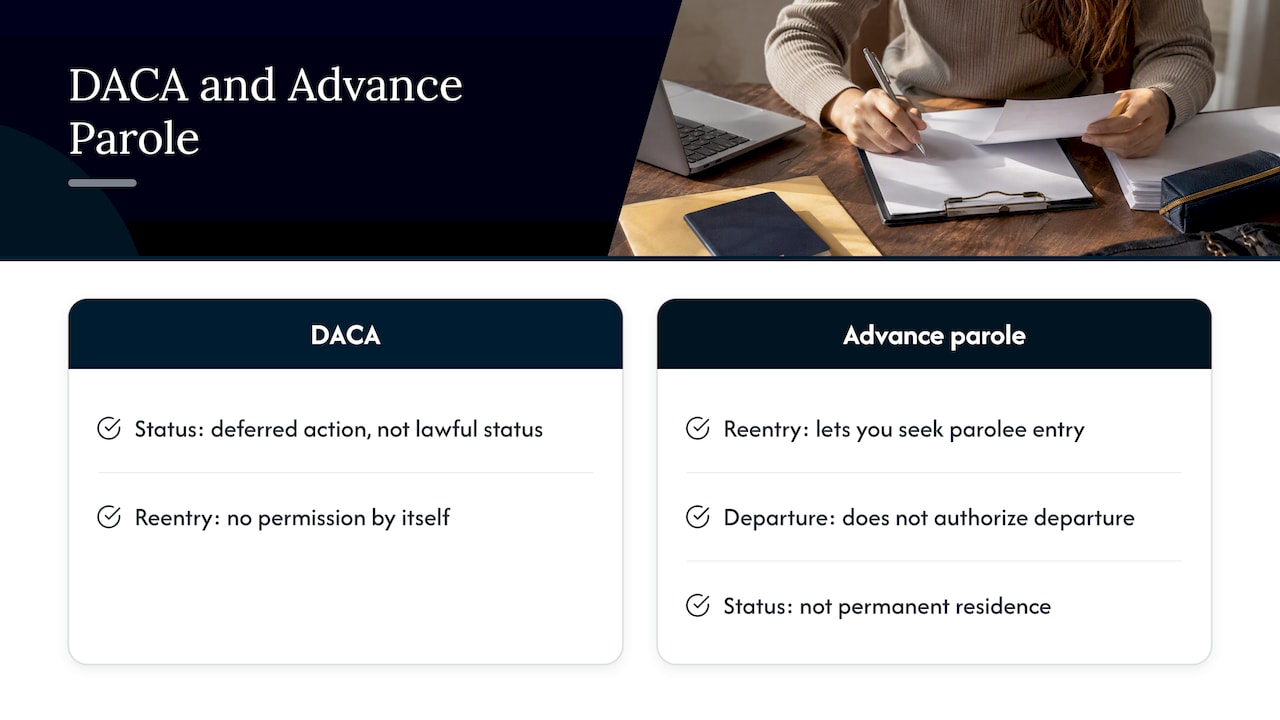
DACA is deferred action. It is not lawful immigration status, and it does not by itself give you permission to come back after you leave. Advance parole fills that gap. Under the USCIS Policy Manual, it is an administrative practice based on the general parole authority in section 212(d)(5) of the Immigration and Nationality Act. In plain terms, it lets you seek entry as a parolee. It does not authorize the departure itself, and it does not make you a lawful permanent resident.
That distinction matters. A DACA recipient who travels without advance parole risks losing DACA and being unable to reenter. USCIS has said it may issue a Notice of Intent to Terminate DACA in those cases, as stated on its DACA page.
People also ask whether the current state of DACA changes any of this. Court orders currently block USCIS from approving initial DACA requests. USCIS continues to accept and decide advance parole applications from people who currently hold valid DACA, and existing DACA grants and advance parole approvals remain recognized, according to its update on the Texas litigation. The rules have shifted before and can again, so check the official page the week you file.
Which trips qualify
USCIS limits advance parole for DACA recipients to three kinds of purposes, according to its DACA frequently asked questions:
| Purpose | Examples USCIS gives | Typical supporting evidence |
|---|---|---|
| Humanitarian | Medical treatment abroad, visiting an ailing relative | Medical records, a doctor’s letter, documentation of a relative’s serious illness or death |
| Educational | Study abroad programs, academic research | A letter from the school or proof of enrollment in a program that requires travel |
| Employment | Overseas assignments, interviews, training, conferences | A letter from your employer or client describing the assignment and why you must attend |
Travel for vacation is explicitly excluded. So are trips whose real purpose is hard to document.
The Immigrant Legal Resource Center notes that the examples USCIS lists are not exhaustive. Advocates can submit other relevant evidence to show why travel is justified. That is where careful preparation pays off. A request that says only “family emergency” is weaker than one with a hospital letter, dates and a clear link between you and the patient.
What reviewers look for
The strongest requests share a few traits:
- A specific reason tied to specific dates.
- Documents from third parties, such as a hospital, school or employer, rather than only your own statement.
- A trip length that matches the stated purpose.
- Translations for any document not in English, with the translator’s certification.
How to apply for advance parole with DACA
You file Form I-131, Application for Travel Documents, Parole Documents, and Arrival/Departure Records. USCIS asks for the filing fee, supporting evidence of the purpose of travel, and translations of non-English documents, per its DACA FAQ.
- Confirm your DACA is valid. USCIS will deny an I-131 if your DACA has expired without a pending renewal request. The agency advises submitting a renewal between 120 and 150 days before the current period ends. Our guide to the DACA renewal process walks through that timeline.
- Choose a qualifying purpose. Match your reason to humanitarian, educational or employment travel, and be honest about it.
- Gather evidence. Collect third-party documents that prove the reason and the dates.
- Check the current fee. USCIS publishes every form fee in its Fee Calculator, which was updated on October 16, 2026. Use it on the day you file, because fees and forms edition requirements change.
- File to the correct address. The filing location depends on how and where you file, so follow the current I-131 instructions.
- Keep your approval notice and travel document with you. Do not leave until you have the approved document in hand.
If you also need to keep your work permit current, remember that renewals and travel requests are separate filings with separate timing. Our article on work permit renewal explains how early you can file to avoid a gap.
Emergencies
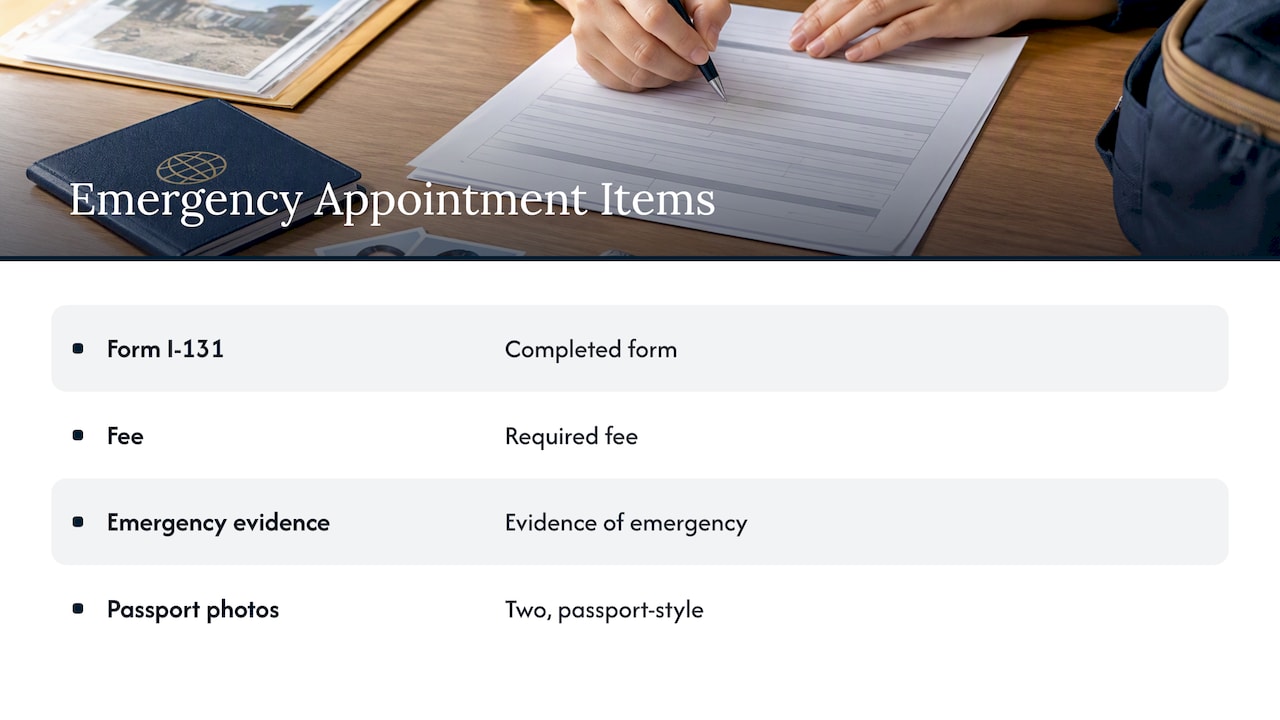
When travel is urgent, USCIS allows DACA recipients to request an emergency advance parole appointment at the local field office through the USCIS Contact Center. You bring a completed Form I-131, the required fee, evidence of the emergency and two passport-style photos, according to USCIS guidance. Emergencies mean things like the imminent death of a close relative, not a trip you would like to move up.
How long DACA advance parole takes
There is no fixed answer. The national median processing time for advance parole documents (Form I-131) was 4.4 months in fiscal year 2024, based on the USCIS historical processing times factsheet. Your own wait can be shorter or longer. USCIS posts current figures on its Case Processing Times page, and that is the number to plan around.
In practice, that means:
- Do not buy a nonrefundable ticket until you hold the approved document.
- If your trip is tied to a date, such as a funeral or a semester, file as early as the facts allow, and consider whether the emergency route fits.
- Do not assume a renewal and a travel request will be decided together.
What about the $1,000 parole fee?
This is one of the most common questions right now, and it is easy to confuse with the I-131 filing fee. They are different charges.
USCIS announced an immigration parole fee of $1,000 for fiscal year 2025, subject to annual inflation adjustments. It is due when a person is paroled into the United States, unless an exception applies. USCIS says not to pay it with Form I-131, in its implementation notice. Whether it reaches a particular DACA recipient, and how it is collected, depends on your facts and on the agency’s current instructions. Ask an attorney to check this before you file, and read the notice again close to your travel date, since the amount adjusts yearly.
Risks to weigh before you leave
Advance parole is permission to apply for reentry, not a promise of it. CBP says plainly that advance parole does not guarantee admission, and travelers remain subject to inspection at the port of entry.
The situations that most often turn a routine trip into a crisis:
- A prior removal or deportation order. USCIS warns that travel without first dealing with the case through the immigration court system may activate the order, with permanent consequences. The agency’s DACA FAQ says to consult an attorney in this situation.
- Criminal history. Even a misdemeanor can change how an officer sees you. If you have an arrest, citation or charge, including a DUI, read our piece on immigration consequences of a DUI and talk to counsel first.
- Expired or lapsing DACA. Your document and your DACA need to be valid on the day you leave and on the day you return.
- Changing enforcement priorities. The American Immigration Lawyers Association advises DACA recipients to always consult an attorney before traveling, because of removal orders, unauthorized entry and possible changes in enforcement.
A practical point: not knowing your own file is a risk too. If you are unsure what your record shows with USCIS, CBP or the immigration court, you can request it. Our guide to an immigration FOIA request explains how and what each agency returns.
Before you board
- Carry the original approved advance parole document, your DACA approval notice and your work permit.
- Bring proof of the purpose of the trip, such as the school letter or the medical letter.
- Keep the trip within the dates on the document.
- Keep an attorney’s phone number available.
Our perspective
We see the same pattern in immigration cases: the families who run into trouble are rarely careless. They are people who made a reasonable decision on partial information. A cousin traveled without a problem, a form said “approved,” a trip felt urgent. Advance parole looks like a simple form, but the risk sits in the details of each person’s history, which a form cannot show.
Our approach is to review the whole file before anyone files an I-131. We look at how you entered, any past orders, any arrests, the status of your DACA and the real reason for travel. Sometimes that review confirms the trip is reasonable and we help build the strongest evidence packet. Sometimes it shows that the safest decision is not to travel. Either answer is better than finding out at an airport.
We also tell clients that DACA has been in legal limbo for years. A document approved today is recognized today. Plan trips with that uncertainty in mind, keep them short and purposeful, and keep your renewals on schedule.
— Paralegal
Get a file review before you file
Loayza Law represents individuals and families in immigration matters, and our team brings a multicultural perspective to each case. If you hold DACA and are weighing travel, we can review your history, advise whether advance parole makes sense and prepare the request. You can learn more on our Salt Lake City immigration page or see all of our practice areas.

We have worked with more than 1,300 clients, and we explain the risks of each option before you decide.
Frequently asked questions
Can I travel abroad with DACA and no advance parole?
We strongly advise against it. USCIS says that without advance parole you risk being unable to reenter, and it may terminate DACA for certain unauthorized entries. Talk to an immigration attorney before you go anywhere.
Can I use advance parole for a vacation?
No. USCIS limits DACA advance parole to humanitarian, educational or employment purposes, and it explicitly excludes vacation travel. A trip that combines a real qualifying purpose with some personal time still needs to be honestly documented around the qualifying part.
Does advance parole lead to a green card?
Not by itself. Advance parole is a travel permission, and it does not give you permanent residence. Some people may have another route to a green card, such as through a family relationship, but that depends on how they entered and other facts. Our guide to adjustment of status in Utah describes the process, and an attorney can tell you whether it applies to you.
How long does advance parole take for DACA recipients?
The national median for advance parole documents was 4.4 months in fiscal year 2024, but your case may differ. Check the USCIS Case Processing Times page for the current estimate, and do not book travel until you hold the approved document.
Is the $1,000 parole fee paid with my I-131?
USCIS says not to pay it with Form I-131. It is due at the time of parole into the United States unless an exception applies. Confirm how it applies to you with an attorney and check the current USCIS notice before you travel.
Sources
- USCIS: Consideration of Deferred Action for Childhood Arrivals (DACA)
- USCIS Policy Manual, Chapter 54: Advance Parole Documents and Boarding Letters
- USCIS: DACA Frequently Asked Questions
- USCIS: DACA decision in State of Texas et al. v. United States
- ILRC: Requesting Advance Parole and Traveling Outside the United States
- USCIS Fee Calculator
- USCIS Historical Processing Times Factsheet, FY2016-2024
- USCIS: New Immigration Parole Fee
- CBP: Advance Parole
- AILA: Understanding Travel Risks for DACA Holders