

In Utah, a father has the same right as a mother to ask a court for custody and parent-time. The court decides by what is in the children’s best interests, not by the parent’s gender. The main difference is for unmarried fathers: legal rights do not begin automatically at birth, so an unmarried dad has to establish paternity first. This guide explains how that works and what to do, step by step.
TL;DR
- Utah courts decide custody and parent-time on the children’s best interests, and a father can ask for either one, whether or not he was married to the mother.
- If you were not married when the child was born, you are not automatically a legal father. Establish paternity through a Voluntary Declaration of Paternity, the Office of Recovery Services (ORS), or a court case.
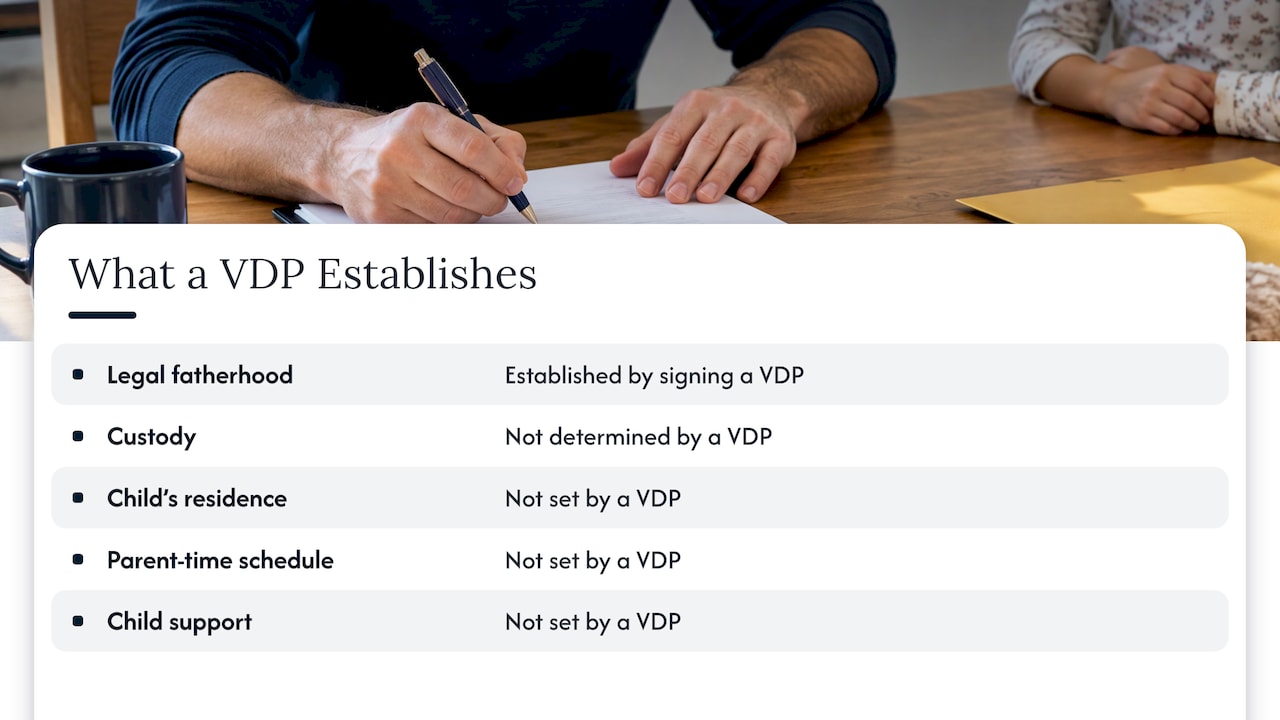
- Signing a paternity declaration does not decide custody, parent-time or child support. Those need a court order or a written agreement.
- Child support and parent-time are separate. You cannot withhold one because of problems with the other.
- If the mother may place the child for adoption, strict deadlines and filings protect your rights. Act early.
Table of Contents
- Do fathers have equal rights in Utah?
- Legal custody and physical custody
- How Utah courts decide custody
- Parent-time: what a father can expect
- Unmarried fathers: establishing paternity first
- Protecting your rights if an adoption is possible
- Starting a custody case as a father
- Child support and parent-time are separate
- A practical checklist for Utah fathers
- Our perspective
- Get help with your Utah custody or paternity case
- FAQ
- Sources
Do fathers have equal rights in Utah?
Utah law does not give mothers a head start. When parents disagree, the judge looks at the children’s best interests. Under Utah Code Section 81-9-204, the court considers the best interests of the child and decides whether a custody or parent-time order serves them by a preponderance of the evidence. It also looks at each parent’s history of domestic violence or abuse, and at whether custody and parent-time would endanger the child’s health or physical or psychological safety.
The Utah Courts’ custody page also says that Utah’s divorce laws control how custody works even if the parties were never married. So the rules below apply to married, divorced, separated and never-married parents alike. The question for an unmarried father is not which rules apply. It is whether he has been legally recognized as the father yet.
Legal custody and physical custody
Custody in Utah has two parts, according to the Utah Courts:
- Legal custody is the right to make important decisions about the children, such as schooling and medical care.
- Physical custody is where the children live.
Either part can be shared or given to one parent. Joint physical custody has a specific meaning in Utah: the children live at least 111 nights a year in the home of each parent, per the same court page. That number matters in practice. A schedule that falls short of it is not joint physical custody, and it can also affect how child support is calculated.
Many fathers focus on the label. We encourage fathers to focus on the schedule and the decision-making terms. A parenting plan that spells out who decides what, how holidays are split, and how exchanges work tends to prevent the next dispute.
How Utah courts decide custody
The Utah Courts list the factors a judge may weigh. They include:
- Each parent’s conduct and relationship with the children
- Each parent’s ability and desire to care for the children
- Willingness to allow the children contact with the other parent
- Evidence of abuse or violence
- Any risk to the child
- Relationships between siblings
- The children’s wishes
- Factors relevant to joint custody
What does this mean for a father? Involvement is evidence. Attending medical appointments, school events and daily routines, and keeping a record of them, shows the court your relationship with the child. Willingness to support the child’s relationship with the other parent is also on the list, and judges notice when a parent undermines it.
Custody may be its own case or part of a divorce, separate maintenance, annulment, adoption, or neglect and dependency proceeding, according to the Utah Courts. If you are also dealing with a marriage ending, our Utah divorce process guide walks through the steps and timing.
Parent-time: what a father can expect
Parent-time is Utah’s term for visitation. When parents cannot agree, state law supplies minimum schedules: Section 81-9-302 for children ages 5 to 18, and Section 81-9-304 for children under 5. Courts can order more than the minimum if it serves the child.
Two points fathers often miss:
- A schedule is only as good as its detail. Holidays, summer, travel and exchange locations should be written down. Our Utah parent-time schedule guide covers the standard rules, holidays and summer.
- Orders can change. If work, housing or the child’s needs change, a modification may be possible. See our custody modification checklist, and read about skipping hearings with a stipulation or ORS review when both parents agree.
Unmarried fathers: establishing paternity first
This is where most searches for father’s rights in Utah end up. Under Utah law, when an unmarried mother gives birth, the biological father does not automatically have legal rights or responsibilities. Until paternity is established, you may not be able to ask for custody or parent-time.
The Office of Recovery Services describes three options for parents who were not married at the child’s birth:
| Route | How it works | Best when |
|---|---|---|
| Voluntary Declaration of Paternity (VDP) | Both parents sign, at the hospital or at home, and file with Vital Records | Both parents agree who the father is |
| Administrative process through ORS | ORS handles it, for example after the parent with custody applies for cash assistance | ORS is already involved |
| Court process | A custody case in district court asks the judge to decide who the legal father is and to make orders | Parents disagree, or you need custody and parent-time orders too |
The ORS calls the VDP the fastest, easiest and least expensive way to establish paternity for unwed parents. Signing and filing it lets the father pursue custody, parent-time and decision-making, allows the child to be added to both parents’ medical insurance, and gives the child a claim to benefits such as inheritance, Social Security and veterans’ benefits, according to ORS.
What a VDP does not do
The Utah Courts are clear that a VDP does not say who has custody, does not set a plan for where the child lives or when each parent has time, and does not set up child support. If you and the other parent cannot work these out, a custody case is the next step. Many dads assume that signing at the hospital settles everything. It settles who the father is. The parenting arrangement is a separate step.
For a fuller walk-through, see our guide to the three Utah paternity routes for unmarried parents.
Protecting your rights if an adoption is possible
This is the part of Utah law where delay costs the most. Utah Code Section 81-13-207 says an unmarried biological father is considered to be on notice that a pregnancy and an adoption may occur, and that he has a duty to protect his own rights. To preserve a right to notice, he must start a court proceeding to establish parentage and file a notice of commencement with Vital Records.
The Utah Courts’ paternity page lists the steps an unmarried biological father must take:
- File a parentage action in a Utah district court.
- File a Notice of Commencement of Paternity Proceeding with Vital Records.
- File an affidavit stating that he can have full custody, can support the child, and will pay pregnancy and childbirth expenses.
- Offer to pay, and actually pay, a fair share of those expenses according to his ability, unless he did not know about the pregnancy or was prevented from paying.
The Utah Department of Health and Human Services states that a father who has not established entitlement to notice of an adoption proceeding can be permanently precluded from claiming rights, and that he must strictly comply with the listed steps. Strictly means exactly. If the mother is pregnant and you are unsure of her plans, do not wait for the birth. Keep records of any payments you make toward expenses, and get the filings in order.
Starting a custody case as a father
If paternity is not in question, or once it is established, a court case is how you get enforceable orders. In Utah, a father can file a custody case asking the court to decide legal fatherhood and to make orders about custody, parent-time and child support. According to the Utah Courts, a parent can use MyPaperwork to prepare the documents that start the case.
Parents in a custody case must also attend mediation to try to resolve parent-time, custody, support and related issues, under Utah Code of Judicial Administration 4-510.05. Go prepared. A proposed schedule, a list of the child’s routines, and your work calendar make mediation more productive. Agreements reached there can become the court’s order.
Child support and parent-time are separate
Fathers often ask whether they can stop paying if the other parent blocks visits. They cannot, and the reverse is also true. The Utah Courts say a custodial parent may not withhold parent-time because support is unpaid, and a parent may not withhold support because parent-time is denied. A parent who disobeys an order may face a motion to enforce, a judgment for money owed or extra parent-time, or a contempt finding with a fine or jail time.
The ORS adds that it cannot set or enforce custody and visitation orders, so a denied-visits problem goes back to the court, not to ORS.
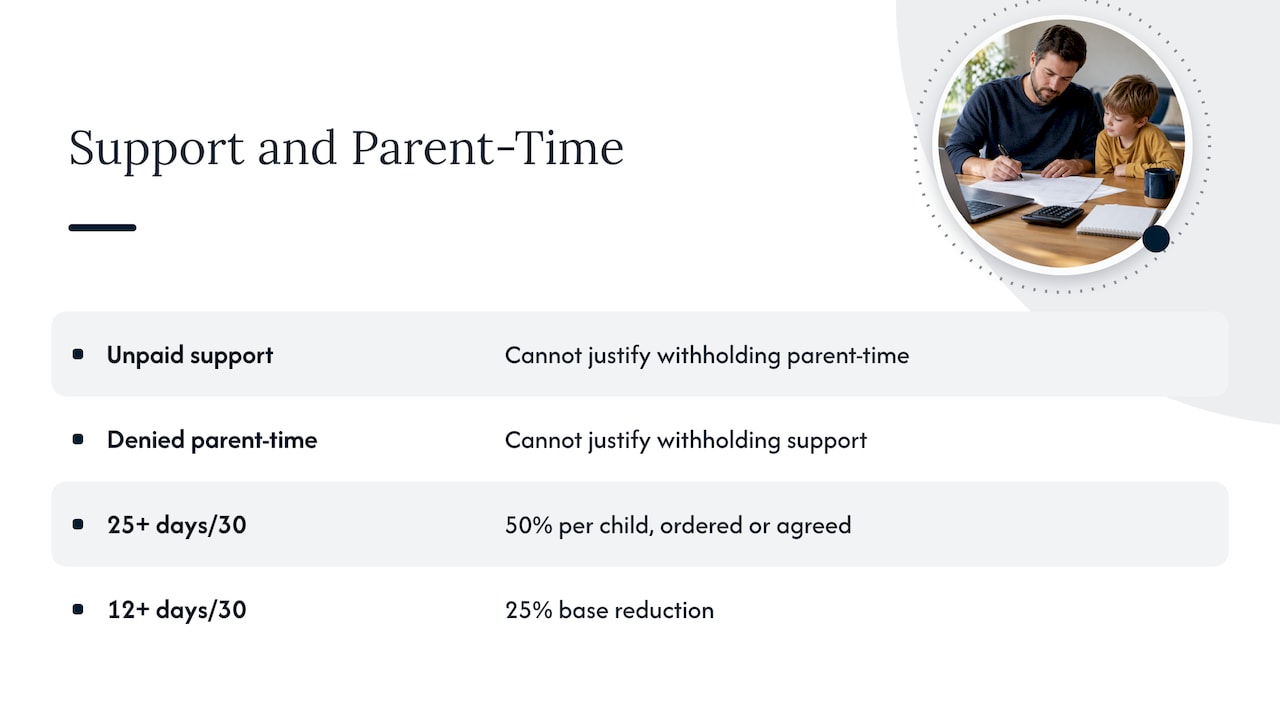
Parent-time can lower support. Under Utah Code 81-6-211, the base award is reduced by 50% per child for periods when the child is with the noncustodial parent for at least 25 of any 30 consecutive days of extended parent-time by order or written agreement. It is reduced by 25% for at least 12 of any 30 consecutive days. Our child support calculation guide helps you estimate payments.
A practical checklist for Utah fathers
- Confirm your legal status. If you were not married to the mother, check whether a VDP was filed or a court has adjudicated paternity.
- Gather proof of involvement: messages, school and medical records, photos, receipts.
- Draft a realistic schedule that you can keep every week.
- Keep paying support under any existing order, whatever the parent-time situation.
- Follow every court order exactly and keep copies.
- If an adoption is possible, start the parentage filings right away.
Our perspective
Most of the fathers who come to us are not worried about the law in the abstract. They are worried about missing time with a child. The most common problem we see is delay: a father assumes he has rights because he is the dad, and finds out later that paternity was never established, or that a deadline passed.
Our approach is to start with the paperwork that makes a father’s position legally secure, then build a parenting plan around the child’s real routine. A detailed schedule, a clear decision-making arrangement and consistent follow-through are what protect a relationship over years.
We bring decades of legal experience in family law to every case, with a client-centered approach built on responsiveness and integrity. Our family law work covers custody, parent-time, support and modifications, so a father does not need a new team when his situation changes.
Paralegal
Get help with your Utah custody or paternity case
Loayza Law handles family law matters in Utah, including child custody, support and modifications. We can help you work out whether paternity is established, what to file, and how to present your involvement with your child to the court.

See our family law services in Salt Lake City or read about the role of a family law attorney in custody cases. You can also start from our practice areas page.
FAQ
Can an unmarried father get custody in Utah?
Yes. Utah’s custody rules apply even if the parents were never married. The father first needs paternity established, by a VDP, through ORS, or by the court. Then he can ask the court for custody and parent-time orders, decided on the child’s best interests.
Does signing the birth certificate or a VDP give me custody?
No. A VDP establishes that you are the legal father, but the Utah Courts note that it does not decide custody, a living plan or child support. If you and the other parent cannot agree on those, you may need to file a custody case.
Can I refuse to pay child support if I am not allowed to see my child?
No. The Utah Courts state that a parent may not withhold child support because parent-time is denied. The correct step is to ask the court to enforce the parent-time order, which can result in extra parent-time or a contempt finding against the other parent.
What is the minimum parent-time schedule in Utah?
When parents cannot agree, state law supplies minimum schedules in Section 81-9-302 for children 5 to 18 and Section 81-9-304 for children under 5. Courts can order more. Our parent-time schedule guide explains the standard rules, holidays and summer.
Do I need to act before the baby is born?
If an adoption is possible, acting early matters. Utah law says an unmarried biological father has a duty to protect his own rights, including filing a parentage action and a notice with Vital Records. The Utah Courts and Vital Records pages list the exact steps.
Sources
- Utah Courts: Child Custody and Parent-Time
- Utah Code Chapter 9, Custody, Parent-time, and Visitation
- Utah Courts: Paternity
- Utah Courts: Paternity Establishment in Utah
- Utah ORS: Voluntary Declaration of Paternity
- Utah ORS: Paternity FAQs
- Utah Code Chapter 13, Part 1 General Provisions
- Utah Vital Records: Putative Father Information
- Utah ORS: Noncustodial Parents FAQs
- Utah ORS: Child Support Guidelines