
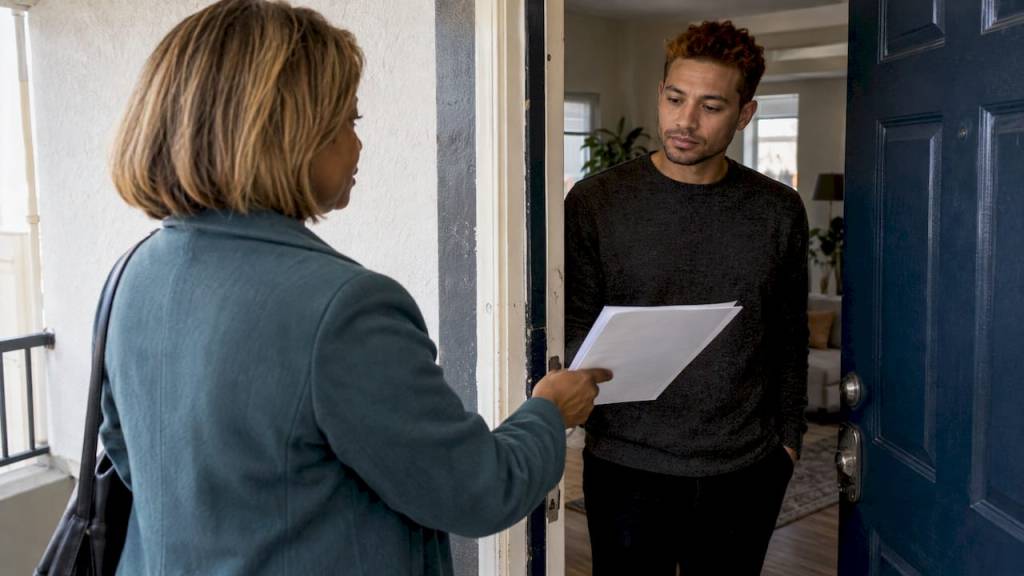
In Utah, violating a protective order is a crime, and police are required to arrest when they have probable cause that a served order was broken. The charge is usually a class A misdemeanor, and it is treated as a domestic violence offense, which can bring added consequences. If you have been accused, the most important steps come early: stop all contact, do not discuss the accusation with the other person, and speak with a criminal defense attorney before you say anything to police or a prosecutor.
This guide explains what counts as a violation, what happens after an accusation, how the penalties and side effects work, and what to do next. It is written for people who have been served with an order or accused of breaking one, and for family members trying to understand what is happening.
TL;DR
- Utah law makes it a class A misdemeanor to intentionally or knowingly violate a protective order after being served or present when it was issued.
- Officers must arrest without a warrant when there is probable cause that a served order was violated. The protected person’s wishes do not control the decision.
- Contact counts even when it is indirect: texts, social media messages, mail, or messages passed through friends and relatives.
- A violation can affect firearm rights, custody cases and, for noncitizens, immigration matters, so the earliest decisions matter.
- Do not contact the protected person to “clear things up.” Talk to a defense attorney first.
Table of Contents
- What counts as violating a protective order in Utah
- What happens after an accusation
- The charge and the penalties
- If you are accused: what to do first
- Utah orders outside Utah, and other states’ orders in Utah
- Recent changes in how violations are investigated
- How we help people accused of a violation
- Our perspective
- FAQ
- Sources
What counts as violating a protective order in Utah
A protective order is a court order that limits what one person (the respondent) may do around another (the protected person, or petitioner). Utah Courts explain that these orders can bar contact, stop threats of violence, require the respondent to stay away from the petitioner’s home, work, school or place of worship, prohibit weapons, and temporarily give the petitioner custody of shared children.
The exact terms are in your written order, and that document controls. Still, the language in Utah’s standard form shows how broad the rules run. The court’s continuous protective order form says the respondent may not harass, telephone, contact or otherwise communicate with the protected person directly or indirectly, including by email, text, social media, social media messages or posts, mail, or other methods.
In practice, these are the situations that most often lead to a charge:
- A “harmless” text or call. A message saying you are sorry, or asking about the kids, is still contact.
- Social media. Posting about the protected person, tagging them or sending a direct message can all fall under the form’s language on social media messaging and posts.
- Messages through other people. Asking a friend, coworker or relative to pass something along is indirect contact.
- Showing up. Appearing at the protected person’s home, workplace or other place the order lists, even briefly or “by coincidence.”
- Contact the other person started. If the protected person texts you first or invites you over, the order still binds you. The order restricts the respondent, and only the court can change it.
The same form carves out a few exceptions. A respondent may attend a hearing as a party or required witness, with notice to the bailiff, and civil court documents may be served, though not necessarily in person. Anything beyond those exceptions should be treated as off limits until a judge modifies or ends the order.
Worked example
Say a respondent is served with a protective order that bars contact and requires him to stay away from his former partner’s apartment. Two weeks later he is anxious about a shared child’s school pickup and sends a short text asking who is handling it. She does not reply and calls police. Under Utah law, he may be arrested if the officer has probable cause that the order was served and the text was contact. Good intentions do not change that. The proper route is a message through counsel or a request to the court, not a direct text.
What happens after an accusation
The process moves quickly, and the arrest rule is stricter than many people expect.
Under Utah Code § 78B-7-119, a law enforcement officer must arrest, without a warrant, a person when there is probable cause to believe they violated a served protective order or stalking injunction of the types the statute lists. That list covers ex parte and civil protective orders, ex parte and civil stalking injunctions, criminal protective orders, permanent criminal stalking injunctions, and qualifying out-of-state orders.
Two practical points follow from that:
- The protected person cannot simply “drop it.” Utah Department of Natural Resources policy, which mirrors how Utah officers are trained to handle these calls, says that the victim’s request not to arrest, the suspect living on the premises, or claims the victim provoked the incident should not be the sole reason for declining to act.
- Officers check the order. The same policy says officers should confirm the order exists, what it says, and whether the suspect was served or present when it was issued, using dispatch or the statewide domestic violence network.
That last point is where a defense often begins. Whether you were properly served, or were present in court when the order was issued, is an element the state has to establish.
Bail after a domestic violence arrest
Because a violation is treated as a domestic violence offense, release conditions after arrest can be more restrictive than for other misdemeanors, and the rules differ from state to state. A general overview of domestic violence bail options shows why you should ask about release conditions, including no-contact terms, the moment you are booked. Breaking release conditions can create a new problem on top of the original charge.
The charge and the penalties
The core offense is in Utah Code § 76-5-108. As amended in 2022, it makes it a class A misdemeanor when a respondent intentionally or knowingly violates a protective order, child protective order, ex parte order, or enforceable foreign protection order after being properly served or present at issuance. The statute also says the violation is a domestic violence offense under § 77-36-1, subject to increased penalties.
A few things in that wording matter for your defense:
- Intent and knowledge. The statute requires an intentional or knowing violation. An accidental encounter, such as running into the protected person at a store, is different from seeking them out.
- Service or presence. The state must show you were served or present when the order was issued.
- The order’s exact terms. Prosecutors have to connect your conduct to a specific term of the order.
Class A is the most serious misdemeanor level in Utah. Our guide to Utah misdemeanor classes and their penalties explains how jail exposure, fines and probation work at each level. A conviction also carries more than the sentence itself.
Firearms
Officers investigating these cases may seize guns or other dangerous weapons for safekeeping or as evidence, if appropriate and legally permitted, according to the Utah policy on court-order violations. Separately, the Giffords Law Center’s Utah summary says a person subject to a final domestic violence protective order may be prohibited from possessing a firearm when the order includes a credible-threat finding or an explicit prohibition on force, and that a domestic violence misdemeanor conviction triggers the prohibition as well. If you own firearms, ask your attorney how your order is worded before you take any action with them.
Family and immigration consequences
A protective order often overlaps with a divorce or custody case. A violation can come up in front of the family court judge and affect parenting arrangements, so the criminal case and the family case should be handled together. If you are also dealing with orders in a custody matter, our guide on modifying Utah custody orders shows how those requests are structured.
If you are not a U.S. citizen, any criminal charge deserves immigration review before you enter a plea. A plea that looks minor in criminal court can raise separate questions in immigration proceedings, so the criminal and immigration sides of the case need to be planned together. Our Salt Lake City immigration page describes that practice.
If you are accused: what to do first
These steps apply whether you have been arrested or only learn that police want to talk.
- Stop all contact. No calls, texts, social posts, or messages through friends. Delete nothing, though. Deleting messages can look like destroying evidence.
- Read the order again. Note the date, the listed protected persons, the places you must avoid, and whether you were served or in court when it was issued.
- Do not explain yourself to police or the protected person. Statements about what you meant can become evidence.
- Gather your own records. Save call logs, messages (including any the other person sent you), and a timeline of the events. Do not use them to contact anyone.
- Check the court’s contact information. Utah Courts tell served respondents to read the order carefully, follow it, and make sure the court has correct contact information for notices. Missing a notice can cause a default or a missed hearing.
- Talk to a defense attorney before your first appearance. Early advice can shape release conditions, plea decisions and any request to the court about the order itself.
Do not try to settle this by asking the protected person to tell police it was a misunderstanding. That is itself contact, and it can lead to a new violation or other charges.
Common defenses an attorney reviews
Every case turns on its facts, but a defense attorney will usually examine:
- Whether you were validly served or present when the order was issued.
- Whether the conduct actually falls inside the order’s written terms.
- Whether the contact was intentional or knowing.
- Whether the order was in effect on the date of the alleged violation.
- Whether the evidence, such as messages or witness statements, is reliable and complete.
Utah orders outside Utah, and other states’ orders in Utah
A protective order does not stop at the state line. Under 18 U.S.C. § 2265, a qualifying protection order must be given full faith and credit and enforced in another state, tribe or territory as if it were that jurisdiction’s own, and prior registration is not required. The order qualifies when the issuing court had jurisdiction and the respondent received reasonable notice and a chance to be heard.
The reverse works the same way in Utah. Under Utah Code § 78B-7-304, an officer who finds probable cause that a valid foreign protection order exists and has been violated must enforce it as a Utah order, and an order that identifies both parties and is in effect on its face is enough for probable cause. Registration in Utah is not required. So a person subject to an out-of-state order who travels to or moves to Utah is still bound by it.

Recent changes in how violations are investigated
Two recent Utah statutes affect how quickly an order reaches police.
- Utah Code § 78B-7-603, effective May 7, 2025, requires the court that issues a cohabitant abuse protective order to send a copy electronically to the local law enforcement agency the petitioner designates by the end of the next business day, and to the statewide domestic violence network. If the respondent meets the federal criteria in 18 U.S.C. § 922(g)(8), a record goes to the Bureau of Criminal Identification within 48 hours, excluding weekends and legal holidays.
- Utah Code § 53-25-1102, effective January 1, 2026, requires each law enforcement agency to maintain a written policy for investigating alleged violations of protective orders and stalking injunctions, including how to handle repeat violators and contact victims.
The practical effect: orders are in the system faster, and agencies have a defined process for investigating alleged violations. A respondent should assume that police will see the order when they respond.
How we help people accused of a violation
If you are facing a protective order violation charge, you need an attorney who handles criminal defense, understands how the case interacts with family court, and can bring in immigration counsel when your status is at stake. Loayza Law’s criminal defense practice covers misdemeanor and felony charges in Utah, and our family law team handles custody, divorce and modification matters. That means one firm can look at the criminal charge and the family case together.
You can see how our criminal defense work in Salt Lake City is described, or review all of our practice areas to find the right fit for your situation.

If you have a court date or have been contacted by police, reach out to us before you respond to anyone. The earlier we see the order, the charging documents and your timeline, the more options you have.
Our perspective
Most of the people who come to us after an alleged violation did not set out to break an order. They sent one message, answered one call, or showed up to pick up a child’s belongings. The law does not weigh that the way they hope it will, and the arrest rule means police often act before anyone has heard the full story.
That is why we focus on the first days. Our approach is to read the order closely, confirm how and when service happened, and understand what the family court case looks like at the same time, because a criminal charge and a custody or divorce case affect each other. Our criminal defense and family law practices work in the same firm, and when immigration is involved we can address it as part of the plan.
We also tell clients plainly what not to do: do not contact the protected person, do not post about the case, and do not try to fix it yourself. Our commitment is to be responsive, to explain each step in plain language, and to advocate for the best outcome the facts allow.
Paralegal
FAQ
What happens if you violate a protective order in Utah?
You can be arrested without a warrant and charged with a class A misdemeanor if you intentionally or knowingly violated a served order. Because the offense is classified as domestic violence, it can carry added consequences, including effects on firearm rights and family court cases. A defense attorney can review the order, service and evidence before your first appearance.
Can the protected person drop the charges or cancel the order?
Not on their own. Officers are directed not to rely solely on the victim’s request not to arrest, and only a judge can modify or end a protective order. If the protected person wants a change, it has to go through the court. Contacting them yourself to ask is a risk, so have an attorney handle it.
Are Utah protective orders valid in other states?
Yes. Federal law requires other states, tribes and territories to enforce a valid protection order as if it were their own, and registration is not required. A violation in another state can lead to arrest there.
Does contact through social media or a friend count as a violation?
It can. Utah’s standard order form lists email, text, social media messaging and posts, and mail as forms of contact, and it covers direct or indirect contact. Passing a message through a friend or relative is treated as indirect contact. Always check the exact wording of your own order.
Is a protective order the same as a restraining order?
They are related but not identical, and the terms differ by state and by type of order. Our guide on protective orders versus restraining orders explains how they compare in Utah.
Sources
- Utah Courts: Protection from Abuse
- Utah Courts: Continuous Protective Order form
- Utah Code § 78B-7-119
- Utah Code § 76-5-108 (as amended 2022)
- Utah DNR: Domestic Violence and Violations of Court Orders
- Giffords Law Center: Firearm Prohibition Laws in Utah
- 18 U.S.C. § 2265
- Utah Code, Uniform Interstate Enforcement of Domestic Violence Protection Orders Act
- Utah Code § 78B-7-603
- Utah Code § 53-25-1102