
This is Utah’s modified comparative negligence rule, codified at Utah Code § 78B-5-818. It decides the outcome of nearly every contested personal injury claim in the state.
TL;DR:
- Utah’s law allows fault to be allocated across multiple parties, including nonparties and immune entities, which can significantly reduce a plaintiff’s recoverable damages.
- Fault is assigned by juries through detailed verdict forms, and damages are fully barred once the plaintiff’s fault reaches 50 percent or more.
- Evidence such as police reports, witness statements, and expert analysis is crucial in accurately assigning fault percentages, especially in hit-and-run or unidentified vehicle cases.
- Early documentation and investigation can lower a plaintiff’s assessed fault, which directly influences the likelihood and amount of compensation received.
- The statute of limitations for personal injury claims in Utah is four years, and missing this deadline can forfeit your right to recover regardless of fault assessment.
Table of Contents
- What Does Utah’s Comparative Negligence Statute Actually Say?
- How Do Juries and Courts Decide Fault Percentages?
- What Happens to Damages at 49% Fault vs. 50% Fault?
- Can Fault Be Assigned to Someone Who Isn’t a Defendant?
- What Should You Do to Protect Your Claim After an Accident?
- How Loayza Law Approaches Fault Allocation in Utah Accident Cases
- Get Help Evaluating Your Utah Personal Injury Claim
- Sources
- FAQ
What Does Utah’s Comparative Negligence Statute Actually Say?
Utah Code § 78B-5-818 sets the rule most attorneys shorthand as “the 50% bar.” Strip away the legal phrasing, and the statute does three things: it lets a jury or judge measure the “proportion of fault” attributable to everyone connected to an accident, it reduces a plaintiff’s recovery by that plaintiff’s own percentage, and it cuts off recovery entirely once the plaintiff’s share reaches 50%.
The phrase “person seeking recovery” in the statute isn’t limited to the person who filed suit. It applies to any party asking for compensation, including a counterclaiming defendant. And “proportion of fault” is deliberately broad. Under the statute, the fact-finder can allocate percentages not just between the plaintiff and the named defendant, but to immune parties and even nonparties who were never sued, according to Utah’s comparative negligence statute.
None of this replaces the basic elements of a negligence claim. A plaintiff still has to prove duty, breach, cause in fact, proximate cause, and actual damages before comparative fault ever enters the picture, according to Utah negligence law. Comparative fault only matters once those five elements are established. It doesn’t rescue a weak causation argument.
Three points worth remembering as you read the rest of this guide:
- Utah measures fault in percentages, not in absolute blame.
- The 50% threshold applies to the plaintiff’s own share, not to any single defendant’s share.
- Fault can be spread across multiple defendants, government entities, employers, or even unidentified drivers.
That single point is the most consequential number in Utah personal injury law.
How Do Juries and Courts Decide Fault Percentages?
Fault doesn’t get assigned by guesswork. Utah juries work from special verdict forms that break the question into discrete pieces rather than asking for one overall impression of blame.
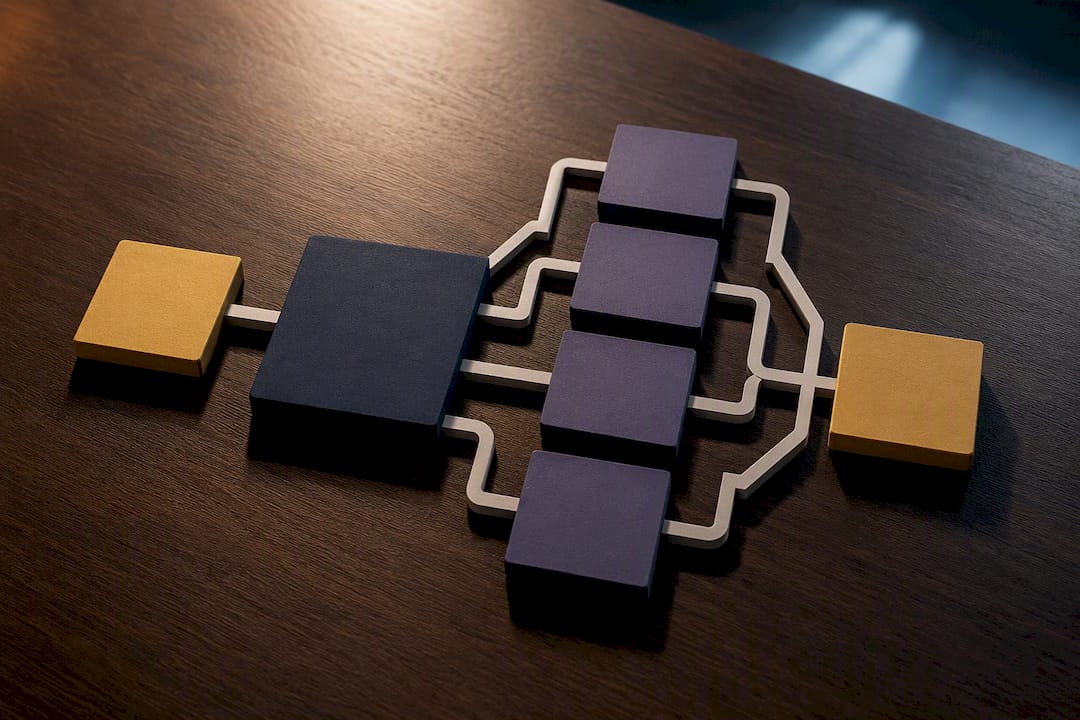
A typical form asks jurors, party by party, whether that person or company was negligent, whether the negligence was a substantial factor in causing the harm, and, only after answering those questions, what percentage of total fault belongs to each party, based on Utah’s pattern jury instructions. The judge then applies the statutory math to the verdict amount.
Evidence drives every one of those percentage assignments. In practice, the mix usually includes:
- Police accident reports and citation history.
- Accident reconstruction analysis, especially in vehicle collisions with disputed speed or right-of-way.
- Eyewitness statements taken close to the time of the incident.
- Medical records tying injuries to the specific mechanism of the accident.
- Expert testimony on causation, standard of care, or engineering failure.
One evidentiary wrinkle deserves special attention: hit-and-run and unidentified-vehicle cases. A plaintiff can ask the fact-finder to allocate a share of fault to a driver who was never identified, but Utah requires clear and convincing evidence that the unidentified vehicle existed and contributed to the crash. That’s a noticeably higher bar than the “more likely than not” standard that governs most other fault questions in a civil trial. Skimping on that proof can leave a real, but unnamed, wrongdoer’s share of fault effectively invisible to the jury, which pushes more blame onto the parties who are present in the courtroom.
What Happens to Damages at 49% Fault vs. 50% Fault?
Picture a jury awarding $1,000,000 in total damages after a serious car accident, then assigning the plaintiff a percentage of fault.
- 0% plaintiff fault: Full recovery. The plaintiff keeps $1,000,000.
- 20% plaintiff fault: Reduced recovery. Damages drop by 20%, leaving $800,000.
- 49% plaintiff fault: Reduced but intact. The plaintiff still recovers 51%, or $510,000.
- 50% plaintiff fault: Barred. Utah Code § 78B-5-818 cuts recovery to zero.
- 60% plaintiff fault: Barred, same as above. Once past the threshold, the exact percentage stops mattering to the outcome.
The jury’s job stops at assigning percentages; the reduction itself is a post-verdict calculation applied by the court, not something jurors compute themselves. That separation matters because jurors are rarely told what dollar consequence follows from a given percentage, according to FindLaw’s summary of Utah negligence law.
That blind spot shapes settlement negotiations long before trial. That’s why experienced counsel spend discovery time narrowing the plaintiff’s own percentage, not only proving the other side’s liability.
Key statistic: Justia’s 50-state survey confirms Utah sits among the states applying a straight 50% bar, one of the more common thresholds nationally but far from universal, as detailed in Justia’s comparative negligence survey.
Can Fault Be Assigned to Someone Who Isn’t a Defendant?
Utah’s statute doesn’t limit fault allocation to the plaintiff and the person being sued. The fact-finder may assign percentages to immune parties and nonparties whenever there’s a factual and legal basis for doing so, under the statute’s allocation provisions. That single provision changes the strategic landscape of a case dramatically.
Some recurring examples show why this matters:
- A government entity that maintained a dangerous road may be immune from suit under the Governmental Immunity Act, but a jury can still assign it a fault percentage, which reduces the pool of fault left for the named defendant.
- An employer whose worker caused a crash while off duty, or an independent contractor relationship that limits vicarious liability, can shift a chunk of fault away from a deep-pocketed defendant.
- An unidentified hit-and-run driver, discussed above, can absorb a fault percentage if the plaintiff clears the clear-and-convincing evidentiary bar.
Allocating fault to a nonparty can materially change a plaintiff’s recovery picture in either direction. It can lower the named defendant’s share of a shared judgment, but if it lowers the plaintiff’s own comparative percentage in the process, the net effect on actual dollars recovered can still favor the plaintiff. Getting these allocations in front of the jury usually requires early pleading and discovery work: naming nonparties at fault, subpoenaing records tied to third parties, and building a factual record long before trial that supports spreading blame beyond the defendant in the courtroom.
What Should You Do to Protect Your Claim After an Accident?
The steps you take in the days after an accident directly affect what percentage of fault an insurer or jury eventually assigns to you. Waiting to act almost always narrows your options later.
- Document the scene immediately. Photos of vehicle positions, road conditions, skid marks, and injuries create evidence that’s nearly impossible to reconstruct later.
- Preserve every medical record from day one. Gaps in treatment give insurers an opening to argue your injuries stem from something other than the accident.
- Collect witness contact information on the spot. Memories fade fast, and a witness who disappears before your attorney can reach them is evidence lost permanently.
- Bring in an accident reconstruction expert early when liability is close. Waiting until a lawsuit is already underway can mean losing access to physical evidence at the scene.
- Push back on the insurance adjuster’s fault percentage. Adjusters routinely assign inflated fault to plaintiffs because it’s cheaper for the insurer, especially near the 50% line. Demand a written breakdown of how they calculated it, and challenge any assumption that isn’t backed by the police report or physical evidence.
- File within Utah’s deadline. Utah’s statute of limitations for personal injury claims is four years from the date of injury, according to a summary of Utah comparative negligence law. Missing that window ends your claim regardless of how strong your comparative fault argument would have been.
How Loayza Law Approaches Fault Allocation in Utah Accident Cases
Comparative fault fights are won or lost on documentation, not persuasion alone. The pattern holds across many cases: clients who preserved evidence early and challenged the insurer’s fault number directly tended to keep more of their recovery.
Our approach to a new personal injury matter starts with locking down the same evidence discussed above: scene photographs, medical documentation, and witness statements, gathered before memories fade or vehicles get repaired. From there, we look specifically at whether fault can be shifted toward a nonparty, an employer, or an immune government actor rather than accepting the insurer’s first offer at face value.
If you’re weighing whether an insurer’s fault assessment is accurate, an intake conversation costs you nothing but a phone call.
— Paralegal
Get Help Evaluating Your Utah Personal Injury Claim
Reading the statute is one thing. Loayza Law works Utah personal injury claims on a contingency fee basis, meaning you owe nothing upfront and nothing at all unless we recover compensation for you.

Before a consultation, gather what you have: the police report, photos from the scene, medical bills and treatment records, and contact information for any witnesses. Even a partial file helps us assess whether the fault percentage being floated by an adjuster actually holds up against the evidence. Our Salt Lake City personal injury practice has built its case strategy around exactly this kind of allocation fight, focusing discovery on lowering a client’s comparative percentage rather than just arguing the other driver was careless.
Sources
- Utah Code Title 78B. Judicial Code § 78B-5-818. Comparative negligence – FindLaw
- Utah Negligence Laws – FindLaw
- Comparative & Contributory Negligence Laws: 50-State Survey – Justia
This article is general information, not a substitute for advice from a qualified lawyer. Consult a qualified legal professional about your own circumstances before acting on anything here.
FAQ
What Is the 50% Rule for Comparative Negligence in Utah?
Below 50%, damages are reduced by the plaintiff’s own percentage of fault, under Utah Code § 78B-5-818.
Which States Use Pure Comparative Negligence Instead of Utah’s Rule?
Utah does not follow this model; it applies the modified 50% bar instead, as confirmed by Justia’s state-by-state survey.
What Four States Still Use Contributory Negligence?
Utah abandoned that harsher rule in favor of its modified comparative negligence system.
Does Utah’s Sunshine Law Affect Personal Injury Claims?
Utah’s open-records law (often called a “sunshine law”) governs public access to government records and meetings; it doesn’t set the standard for personal injury fault allocation. Comparative negligence in personal injury cases is governed separately by Utah Code § 78B-5-818.
How Long Do I Have to File a Personal Injury Claim in Utah?
Utah’s statute of limitations for personal injury claims is four years from the date of injury, according to a summary of Utah’s comparative negligence framework. Filing early also preserves evidence that affects how fault percentages get assigned later.