
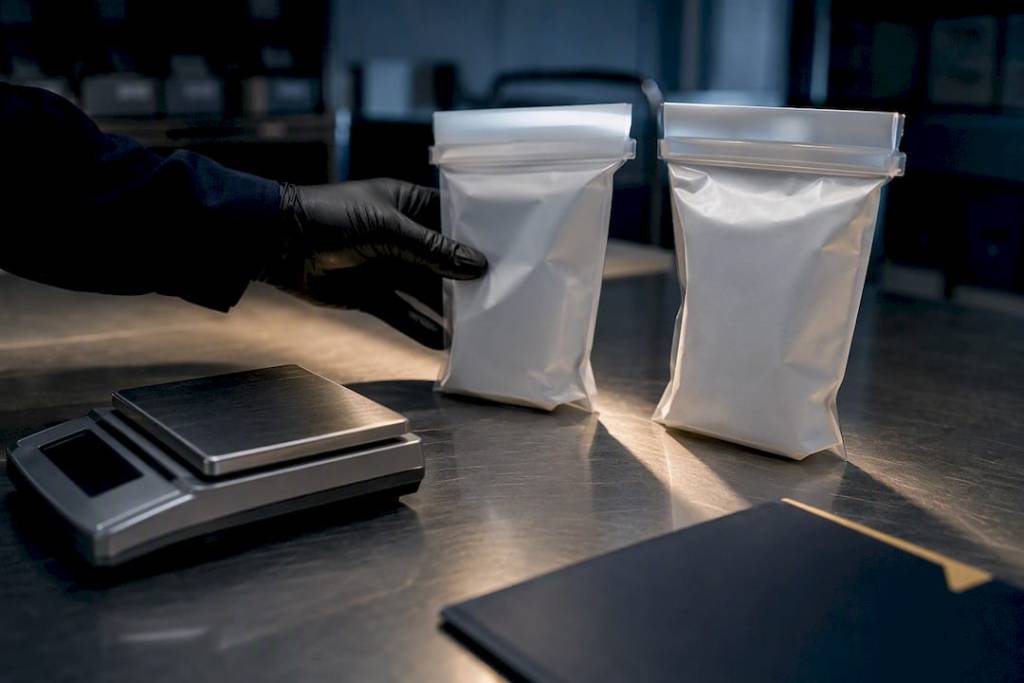
Most first-time, low-quantity drug possession cases in Utah start as a class B or class A misdemeanor, but the actual penalty depends on four things: the drug’s schedule, the amount found, any prior convictions within a recent seven-year period, and enhancements like location or firearms, so consulting a drug crimes lawyer early can be critical. A single factor can push a misdemeanor into felony territory, which is why talking to a criminal defense attorney early matters more than guessing at outcomes.
TL;DR:
- Possession of Schedule I or II drugs triggers harsher penalties, with quantities and prior offenses quickly escalating charges from misdemeanors to felonies.
- Possessing over one ounce of marijuana typically results in a misdemeanor, but possession of 100 pounds or more can lead to a second-degree felony charge.
- Prior convictions within seven years significantly increase charges, and distribution or use of paraphernalia can raise misdemeanor charges to felonies, especially near schools or with firearms.
- Diversion programs, suppression motions, and early attorney involvement can improve outcomes, particularly for first-time and low-level cases.
- Noncitizens face additional immigration risks with drug charges, making early legal consultation crucial to avoid long-term consequences.
Table of Contents
- Utah Drug Possession Penalties at a Glance
- How Drug Schedules and Quantity Shape the Charge
- Paraphernalia Charges and What Escalates a Case
- How Prior Convictions Escalate a New Charge
- Fines, Probation, and Other Consequences Beyond Jail
- What Defenses and Resolutions Are Actually Available?
- What Should You Do Immediately After a Drug Charge?
- What Loayza Law Sees in Utah Possession Cases
- Get Straightforward Help With a Utah Drug Charge
- Sources
- FAQ
Utah Drug Possession Penalties at a Glance
Utah’s sentencing structure runs on a sliding scale, and the gap between the bottom and top of that scale is wider than most people expect. A class C misdemeanor might mean a $750 fine and no jail time. A first-degree felony can carry life in prison. Everything depends on where a specific case lands on that spectrum, and Utah Code § 58-37-8 is the statute that draws those lines.
Here’s how the ranges typically break down:
- Class C misdemeanor: up to 90 days in jail, fines up to $750.
- Class B misdemeanor: up to 6 months in jail, fines up to $1,000.
- Class A misdemeanor: up to 1 year in jail, fines up to $2,500.
- Third-degree felony: up to 5 years in prison, fines up to $5,000.
- Second-degree felony: 1 to 15 years in prison, fines up to $10,000.
- First-degree felony: 5 years to life in prison, fines up to $10,000.
The Utah Courts system confirms these ranges apply broadly across criminal offenses, not just drug charges, but drug possession cases move up this ladder fast once quantity or prior record enters the picture. Court surcharges get added on top of the base fine in nearly every case, so the number on paper is rarely the final bill.
How Drug Schedules and Quantity Shape the Charge
Utah sorts controlled substances into five schedules, and where a substance falls decides how much legal exposure a person is carrying before anything else is even considered. Schedule I and II drugs, which include heroin, methamphetamine, and cocaine, trigger the harshest starting point under Utah Code § 58-37-8 because lawmakers treat them as having high abuse potential and no accepted medical use.
Schedule III through V substances, often prescription medications like certain painkillers or anti-anxiety drugs, generally carry lower base penalties for simple possession. Marijuana sits in its own category with a specific quantity marker: possession under one ounce is typically a class B misdemeanor, but the charge escalates sharply as weight increases, and possession of 100 pounds or more can trigger a second-degree felony tied too intent to distribute.
Quantity does more than set the charge level. It also shapes how prosecutors interpret intent:
- Small amounts consistent with personal use usually stay in misdemeanor territory.
- Larger quantities, especially when combined with packaging materials like baggies or scales, often get charged as possession with intent to distribute.
- Cash, multiple containers, or texts referencing sales can turn a possession case into a distribution case, even without an actual sale taking place.
Paraphernalia Charges and What Escalates a Case
Drug paraphernalia charges run on a separate but related statute, and they surprise a lot of people who assume a pipe or a baggie is a minor add-on to the main charge. Under Utah Code § 58-37a-5, simple possession or use of paraphernalia is a class B misdemeanor on its own.
- Possession or use: class B misdemeanor.
- Delivery or manufacture of paraphernalia: class A misdemeanor.
- Delivery to a minor: third-degree felony, regardless of the adult’s own criminal history.
The same statute, mirrored in the Justia copy of the code, builds in mitigation paths that prosecutors and courts do consider. Participation in a lawful syringe-exchange program, use of sealed sharps containers, or documented engagement with a treatment program can support a reduced charge or even dismissal in the right circumstances.
Location and weapons matter just as much as the drug itself. Possession within a drug-free zone, such as near a school or park, or possession while armed with a firearm, can bump a straightforward misdemeanor up one or more levels under the enhancement provisions tied to § 58-37-8.
Pro Tip: If a paraphernalia charge came with a possession charge, don’t assume they’ll be resolved the same way. Prosecutors sometimes offer to drop the paraphernalia count in exchange for a plea on the underlying possession charge, but only if that’s raised early in negotiations.
How Prior Convictions Escalate a New Charge
Utah counts back seven years from the date of a new offense to determine whether a prior conviction applies, and this lookback window is one of the most consequential parts of Utah Code § 58-37-8. A conviction that falls outside that window generally doesn’t count toward escalation, but anything inside it does, and each qualifying prior pushes the new charge up.
- A first offense might be a class B misdemeanor.
- A second offense within seven years can become a class A misdemeanor or third-degree felony, depending on the substance.
- A third qualifying offense often lands as a felony regardless of the amount involved.
Prior distribution or manufacturing convictions carry even more weight than prior simple possession convictions. Even a small amount found during a new arrest can be charged more aggressively if the person’s record shows a prior distribution case, because prosecutors read that history as evidence of ongoing involvement rather than isolated use. Legal analysis from LegalClarity notes that Utah’s 2015 reform (often referenced as HB348) softened penalties for many low-level, first-time cases, but the seven-year lookback means that softening disappears quickly for anyone with a recent record.
Fines, Probation, and Other Consequences Beyond Jail
A conviction’s cost rarely stops at the fine printed in the statute. Court surcharges, typically calculated as a percentage of the base fine, get tacked on automatically, and probation supervision fees add up over months or years of compliance monitoring.
- Fines and surcharges: base fines range from $750 to $10,000 depending on offense class, plus surcharges set by the courts.
- Probation: many possession sentences include probation with mandatory drug testing, treatment attendance, or community service instead of, or alongside, jail time.
- Driver’s license effects: certain drug convictions can trigger license suspension separate from any DUI charge.
- Immigration risk: for noncitizens, even a misdemeanor drug conviction can trigger removal proceedings or bar future immigration relief, regardless of how the criminal case itself resolves.
Compliance with probation and treatment terms genuinely affects outcomes. Courts often reduce supervision length or convert remaining probation to unsupervised status when someone completes treatment ahead of schedule. Noncitizens facing a drug charge should talk to immigration counsel before entering any plea, since some pleas that look favorable in criminal court create serious immigration consequences that can’t be undone afterward.
What Defenses and Resolutions Are Actually Available?
A drug possession charge in Utah isn’t a fixed outcome, and several paths can change where a case ends up. The right option depends on the facts of the stop, the person’s record, and how early a defense attorney gets involved.
- Diversion and treatment-based resolution. Many first-time and low-level cases qualify for diversion programs that lead to dismissal after completing treatment, drug testing, and court check-ins.
- Suppression motions. If police lacked reasonable suspicion for a stop or probable cause for a search, a motion to suppress can get the evidence, and often the entire case, thrown out.
- Chain-of-custody challenges. Gaps in how evidence was collected, stored, or tested can undermine the prosecution’s case even when a substance was clearly found.
- Plea negotiation. When the evidence is solid, negotiating down to a lesser charge or reduced sentence, rather than going to trial, is often the more realistic move.
- Expungement or sealing. Once diversion or probation is completed, many Utah drug convictions become eligible for expungement, clearing the way for employment and housing applications down the line.
Pro Tip: Diversion eligibility often depends on raising it before arraignment, not after. Waiting until later in the process can close a door that was open at the very first hearing.
What Should You Do Immediately After a Drug Charge?
The hours right after an arrest set the tone for everything that follows, and small missteps here can limit options later.
- Say nothing beyond identifying yourself, and ask for an attorney immediately. Anything said to police gets used, and rarely helps.
- Write down everything about the stop and arrest while it’s fresh. Note the time, location, what officers said, and whether a search happened before or after any arrest.
- Identify any witnesses who saw the stop or search take place.
- Schedule a consultation with a criminal defense attorney within days, not weeks, so diversion and suppression options stay on the table.
What Loayza Law Sees in Utah Possession Cases
Experienced criminal defense attorneys observe that cases tend to resolve better when a defense attorney gets involved before the first court date, not after. Filing early suppression motions, pushing for diversion before arraignment, and building a treatment record for mitigation are the strategies that move outcomes. If you’re facing a possession or paraphernalia charge, a consultation now protects options that disappear later.

Get Straightforward Help With a Utah Drug Charge
A drug possession charge moves fast through Utah’s court system, and the window for diversion, suppression motions, or favorable plea terms narrows with every week that passes without representation. Loayza Law handles criminal defense cases across Utah, working directly with clients to identify whether diversion, a suppression motion, or negotiated resolution fits their specific charge and record.

A consultation with a criminal defense attorney can walk through the charge, the schedule and quantity involved, any prior record within the seven-year lookback, and which defense path realistically applies before deciding on a strategy. For noncitizens, that conversation also flags immigration exposure early, when it still can be managed. If you or someone in your family is facing a possession or paraphernalia charge anywhere in Utah, reach out to Loayza Law’s criminal defense team to schedule a consultation and find out where the case actually stands.
Sources
This article is general information, not a substitute for advice from a qualified lawyer. Consult a qualified legal professional about your own circumstances before acting on anything here.
FAQ
What is the minimum sentence for possession of a controlled substance in Utah?
The lowest tier is a class C misdemeanor, which carries no mandatory jail time but allows up to 90 days in jail and fines up to $750 under Utah Code § 58-37-8.
Which state has the strictest drug laws compared to Utah?
Utah’s penalties are moderate compared to states with mandatory minimums for low-level possession, and Utah’s 2015 reform actually reduced sentencing exposure for many first-time cases, though the seven-year lookback still escalates penalties quickly for repeat offenders.
What changed in Utah drug possession law recently?
Utah’s core possession statute, Utah Code § 58-37-8, continues to reflect reforms that downgraded many low-level, first-time possession offenses toward misdemeanor treatment, with escalation still tied to schedule, quantity, and prior convictions within seven years.
What is the penalty for driving with a measurable controlled substance in Utah?
Driving with a measurable controlled substance in the body is prosecuted separately from standard possession charges and carries its own DUI-related consequences, including license suspension; noncitizens facing this charge should also review potential immigration consequences before entering a plea.
Does a paraphernalia charge always come with a possession charge?
Not necessarily. Paraphernalia possession under Utah Code § 58-37a-5 can be charged on its own as a class B misdemeanor, though it’s frequently filed alongside a possession charge when both are found at the same time.
— Paralegal