

Utah divides marital property under an equitable distribution standard, not an automatic 50/50 split. You must complete a Financial Declaration with required attachments within 14 days after the first answer is filed, and contested divorces require mediation before trial. Retirement accounts typically need a Qualified Domestic Relations Order, or QDRO, before they can be split between spouses.
TL;DR:
- Utah courts consider multiple factors such as marriage duration, age, health, and contributions when dividing property, leading to non-automatic 50/50 splits.
- Commingling assets, like depositing inheritance into joint accounts, can convert separate property into marital property and complicate division.
- Spouses must disclose financial details within 14 days of filing the initial answer, with penalties for nondisclosure including sanctions and attorney fee awards.
- Retirement account division requires a Qualified Domestic Relations Order, and property valuation often needs professional appraisals for complex assets like businesses or artwork.
- Final property division orders are typically permanent, with limited grounds for appeal or modification based on new evidence or errors.
Table of Contents
- What Utah law requires: equitable distribution and statutory framework
- Marital vs separate property: common pitfalls and commingling
- Required disclosures, timelines, and consequences for nondisclosure
- How courts handle common asset types: real estate, retirement, personal property, and debts
- Mediation, settlement, and when cases go to trial
- Practical preparation checklist: documents, valuation steps, and questions to bring to your attorney or mediator
- How Utah courts handle division of business ownership or professional licenses
- Impact of prenuptial or postnuptial agreements on property division
- Process for valuing complex assets such as closely held businesses or artwork
- Appeals process and modifying property division orders after divorce finalization
- How Loayza Law approaches Utah property division cases
- How Loayza Law can help with your property division case
- Sources
- FAQ
What Utah law requires: equitable distribution and statutory framework
Utah Code 30-3-5 gives courts authority to issue equitable orders covering property, debts, maintenance, and health care as part of a divorce decree. The statute lists factors judges weigh when deciding what counts as fair, and fair rarely means equal.
A marriage that lasted two years and one that lasted twenty years will usually produce very different outcomes, even with similar assets on paper. Courts look at the whole picture rather than splitting every account down the middle.
Factors the court may consider include:
- Length of the marriage and each spouse’s age and health.
- Earning capacity, occupation, and employability of each party.
- Financial condition and needs of each spouse after the divorce.
- Contributions made by each spouse to the marital estate, including homemaking.
The court also keeps continuing jurisdiction over the decree, which means it can enforce debt allocation, insurance obligations, and other property terms after the divorce is final. That authority matters later if one spouse stops following through on what the decree requires.
Marital vs separate property: common pitfalls and commingling
Marital property generally includes anything acquired during the marriage, while separate property covers assets owned before the marriage, inheritances, and gifts given to one spouse individually, according to Utah Courts guidance on property division. The line between the two blurs quickly once money starts moving between accounts.
Depositing an inheritance into a joint checking account, or using separate funds to pay down a jointly titled mortgage, can turn what started as separate property into marital property. This is called commingling, and once funds are no longer traceable, a court may treat the whole balance as shared.
- Keep inherited or gifted funds in a separate account, never a joint one.
- Save documentation showing the original source of any separate asset.
- Avoid using separate money for joint household expenses when possible.
Pro Tip: Open a dedicated account for any inheritance or premarital asset the day you receive it, and never deposit marital income into it.
Required disclosures, timelines, and consequences for nondisclosure
Utah requires both spouses to complete a Financial Declaration with specific supporting documents, and the clock starts running the moment the first answer is filed in the case.
- Gather your records early. You will need 12 months of pay stubs, 3 months of bank statements, and 2 years of tax returns, along with asset inventories, property titles, and current account statements, according to Utah Courts’ Financial Declaration instructions.
- Meet the 14-day deadline. The Financial Declaration and its attachments are due within 14 days after the first answer is filed, and Utah Courts’ initial disclosure guidance explains when a new declaration is required for hearings on temporary orders or trial.
- Understand the cost of hiding assets. A spouse who fails to disclose income or property risks court-ordered sanctions, an award of attorney fees to the other side, and remedies available under the Utah Rules of Civil Procedure.
- Know how to respond to nondisclosure. If you suspect your spouse is withholding assets, your attorney can file a Motion to Enforce to compel compliance and seek penalties for the delay.
Readers who want a fuller picture of how these deadlines fit into the overall case timeline can review our Utah divorce process overview.
How courts handle common asset types: real estate, retirement, personal property, and debts
Each category of property tends to follow its own path through a divorce case, and knowing what to expect helps you prepare realistic questions for your attorney.
- Real estate. Courts often order a home sold and the proceeds split, or allow one spouse to buy out the other’s equity and refinance the mortgage into their own name, with a quitclaim deed transferring title once the buyout is complete.
- Retirement accounts. Utah Courts explain that dividing a pension or 401(k) typically requires a QDRO, a separate court order drafted after the decree that tells the plan administrator how to split the account, according to Utah Courts’ property division guidance. Some pension plans use a formula to prorate the portion earned during the marriage.
- Personal property. Vehicles, furniture, and valuables are easier to divide when both spouses create a written inventory with serial numbers and, for higher value items, a professional appraisal.
- Debts. Courts divide responsibility for marital debt in the decree, but a decree does not bind creditors, so a joint credit card company can still pursue either spouse if payments stop.
A decree assigning a debt to one spouse does not remove the other spouse’s name from the original loan, according to Utah Courts’ guidance on dividing debts, which means enforcement against a nonpaying ex often requires going back to court with a Motion to Enforce.
Mediation, settlement, and when cases go to trial
Utah requires at least one mediation session in contested family law matters unless a judge excuses it for good cause, and the mediator must be qualified on the state’s approved roster, according to Utah Courts’ divorce mediation guidance. Mediation costs are generally split equally between spouses unless the court orders otherwise.
- Settling through mediation gives both spouses more control over the outcome than waiting for a judge’s ruling.
- Trial takes longer, costs more, and leaves the final property division decision entirely in the court’s hands.
- Even a partial settlement on property issues can narrow what needs to be argued at trial.
Our page on contested vs uncontested divorce walks through how these two paths differ in practice.
Practical preparation checklist: documents, valuation steps, and questions to bring to your attorney or mediator
Getting organized before your first meeting with an attorney saves time and often saves money.
- Collect your paperwork. Pull together 12 months of pay stubs, 3 months of bank statements, 2 years of tax returns, retirement account statements, mortgage and title documents, loan statements, and any recent appraisals.
- Build a simple asset inventory. A spreadsheet listing every account, property, and major item of personal property, with current values, makes conversations with your attorney far more productive.
- Request account valuations. Ask retirement plan administrators for a valuation as of your separation date, and again closer to filing if the case drags on.
- Prepare your questions. Ask about likely split scenarios for your specific assets, how a QDRO will be handled, realistic cost estimates, and a timeline for finalizing property division.
Pro Tip: Bring your asset inventory spreadsheet to the first attorney meeting rather than a box of loose paperwork. It speeds up the conversation considerably.
How Utah courts handle division of business ownership or professional licenses
A business started or grown during the marriage is typically treated as marital property subject to equitable division, even when only one spouse’s name appears on the paperwork. Courts look at how much the business grew during the marriage and how much of that growth came from one spouse’s individual effort versus shared marital resources.
Professional licenses and degrees, such as a law license or medical credential, are generally not treated as property to be divided, since Utah courts have cautioned against converting a person’s earning reputation into a divisible asset. In Sorensen v. Sorensen, the Utah Supreme Court addressed valuing a dental practice and warned against double counting the same earnings in both the property division and an alimony award.
In practice, this means a spouse who built a business or earned a professional degree during the marriage may still owe the other spouse a share of the business’s value, but the court will try to avoid counting that value twice, once as an asset and again as future income used to calculate support. Our overview of Utah alimony laws explains how property division and support often interact in the same case.
Because appellate courts give trial judges broad discretion and rarely overturn a property division absent a clear abuse of that discretion, thorough documentation of a business’s finances matters far more than arguing after the fact that the valuation was wrong.

Impact of prenuptial or postnuptial agreements on property division
A valid prenuptial or postnuptial agreement can override Utah’s default equitable distribution rules for the assets it specifically addresses. If you and your spouse signed an agreement spelling out how a business, a piece of real estate, or an inheritance would be handled in a divorce, courts generally enforce those terms rather than applying the statutory factors from scratch.
That enforcement is not automatic. A court will still review the agreement for basic fairness and proper execution, checking that both spouses had the chance to review it, disclosed their finances honestly at the time of signing, and were not pressured into signing right before the wedding. An agreement signed under pressure, without financial disclosure, or without each spouse having their own attorney review it, is more vulnerable to a challenge.
For couples without a written agreement, every asset defaults back to the marital versus separate property analysis described earlier in this guide. Readers considering a prenup before marriage, or wondering whether an existing one will hold up, can find more detail on our Utah prenuptial agreement page.
Process for valuing complex assets such as closely held businesses or artwork
Assets without a simple market price, like a closely held business, a professional practice, or a valuable art collection, require a different approach than splitting a bank account. These cases typically call for a professional appraiser or forensic accountant to assign a defensible value before negotiations or trial can move forward.
For a business, that process usually means reviewing tax returns, profit and loss statements, and client or contract records to separate the value the business had before the marriage from the growth that happened during it. Sorensen v. Sorensen is a frequently cited Utah case on this point, since the court had to decide how much of a dental practice’s value reflected the dentist’s personal reputation rather than a transferable business asset.
For artwork, antiques, or collectibles, a qualified appraiser documents condition, provenance, and comparable sales to arrive at a current fair market value. Both spouses sometimes hire their own appraiser when the stakes are high enough, and the two valuations get reconciled through negotiation or a judge’s ruling if the case goes to trial.
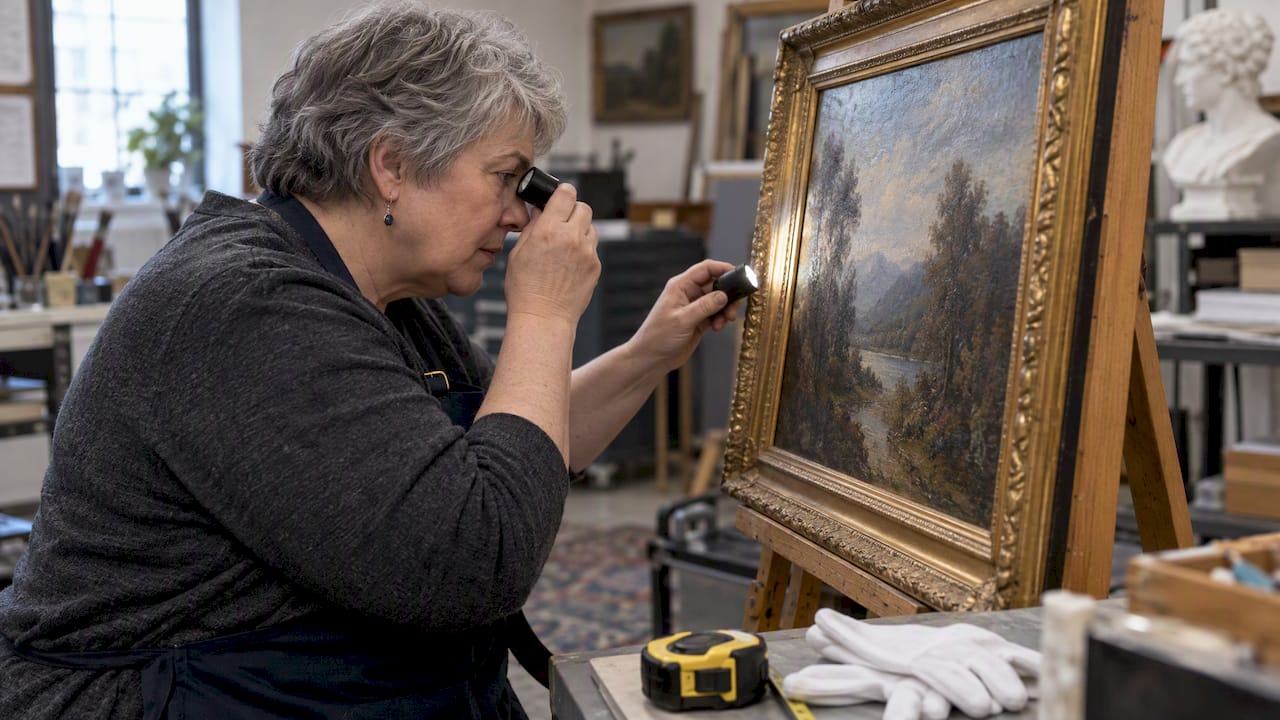
Because these valuations directly affect how much one spouse may owe the other in a buyout, getting a credible number early tends to shorten the overall dispute rather than prolong it.
Appeals process and modifying property division orders after divorce finalization
Once a Utah divorce decree is final, the property division portion is generally treated as permanent, unlike custody or support orders, which can be modified later if circumstances change. Appellate courts give trial judges wide discretion in dividing property, and will not disturb that division unless there was a clear abuse of discretion, according to the reasoning in Sorensen v. Sorensen.
This makes the window for challenging a property division narrow. An appeal typically has to be filed within a short deadline after the final decree, and it has to point to a specific legal or factual error rather than simply arguing the outcome felt unfair.
Reopening a property division after the appeal window closes is difficult, though not always impossible. Fraud, a hidden asset discovered after the fact, or a clerical error in how the decree was written can sometimes support a motion to set aside part of the judgment. This is a different and higher bar than the processes used to modify ongoing support or custody arrangements, which is one more reason thorough disclosure and documentation matter so much the first time around.
How Loayza Law approaches Utah property division cases
This firm has decades of legal experience across family law and other practice areas. The family law team focuses on practical groundwork to move a property division case forward, including organizing financial disclosures, coordinating QDRO paperwork with plan administrators, and preparing clients for mediation sessions. Our guide on Utah alimony laws reflects the same client-first approach we bring to every case.
— Paralegal
How Loayza Law can help with your property division case
Dividing a home, a retirement account, or a small business during divorce gets complicated fast, and having a Financial Declaration already organized makes every conversation with your attorney move faster.

The family law team can assist with practical aspects often needed in these cases, such as preparing and reviewing Financial Declarations and attachments, coordinating QDRO paperwork, representing clients in mediation and trial if needed, and connecting clients with qualified appraisers for business, property, or collectible valuations.
If you are preparing for a divorce involving real estate, retirement accounts, or a family business, visit our family law practice page to schedule a consultation and bring your financial documents with you.
Sources
- Property division — Utah Courts
- Financial declaration — Utah Courts
- Utah Code — 30-3-5 Disposition of property
This article is general information, not a substitute for advice from a qualified lawyer. Consult a qualified legal professional about your own circumstances before acting on anything here.
FAQ
Does Utah split marital property exactly 50/50?
No. Utah follows an equitable distribution standard, meaning courts aim for a fair division based on statutory factors rather than an automatic equal split, according to Utah Courts’ property division guidance. Length of marriage, earning capacity, and each spouse’s contributions all factor into the final outcome.
How soon do I have to file a Financial Declaration in Utah?
You must file your Financial Declaration and required attachments within 14 days after the first answer is filed in the case, according to Utah Courts’ instructions. Missing this deadline can delay your case and invite court scrutiny.
Is mediation required before a Utah divorce trial?
Yes, contested family law cases in Utah require at least one mediation session unless a judge excuses it for good cause, according to Utah Courts’ mediation guidance. Mediation costs are typically split equally between spouses unless the court orders a different arrangement.
What happens if my spouse hides assets during divorce?
A spouse who hides assets or income risks court-ordered sanctions and may be required to pay the other spouse’s attorney fees under remedies available through the Utah Rules of Civil Procedure. Your attorney can file a Motion to Enforce to compel disclosure once nondisclosure is discovered.
Can I change the property division after my Utah divorce is final?
Property division is generally treated as permanent once the decree is finalized, unlike custody or support orders. Reopening it later typically requires proof of fraud, a hidden asset, or a clerical error, and falls under a much narrower standard than a routine modification request.