

If the Labor Commission or your employer’s insurer denied your workers’ compensation claim, file an Application for Hearing with the Utah Labor Commission’s Adjudication Division now. You will need supporting forms, including the Summary of Medical Record and Medical Treatment Provider List, attached at filing. Expect a formal hearing months out, and think carefully about whether you want an attorney handling the process with you.
TL;DR:
- Filing a complete application with all required forms, including medical summaries and authorizations, is crucial to avoid rejection and delays in the process.
- The hearing is a formal, live cross-examination where your evidence, witness testimony, and medical records must be thoroughly prepared and organized.
- Seeking legal representation is advisable, especially for complex cases involving disputed causation or multiple defendants, due to the formal and adversarial nature of the proceedings.
- Missing deadlines or incomplete filings can lead to case dismissal if not corrected within 60 days, emphasizing the importance of prompt, meticulous paperwork submission.
- New medical evidence can be submitted after filing, but it must be timely, well-organized, and linked to the injury to strengthen your appeal.
Table of Contents
- Exact forms and documents to file with your Application for Hearing
- What happens after you file: timeline and official deadlines
- The evidentiary hearing: format, what to expect, and common procedural traps
- Discovery and a practical evidence checklist to prepare before the hearing
- Do you need a lawyer? What legal representation looks like in Utah workers’ comp appeals
- How incomplete filings are handled: the 60-day refile consequence
- Common reasons for denial of workers’ compensation claims in Utah
- How to request and submit additional evidence or medical records after filing the appeal
- Explanation of the role and procedures of the Utah Labor Commission Appeals Board
- Possible outcomes of a workers’ compensation appeal and next steps after a decision
- Tips for effectively presenting testimony and evidence during the hearing
- Overview of settlement options during or after the appeal process
- Paralegal perspective: practical lessons from preparing Utah hearings
- How Loayza Law can help with your Utah workers’ comp appeal
- Authoritative Utah forms and guidance (links you need to file and prepare)
- Sources
- FAQ
Exact forms and documents to file with your Application for Hearing
Filing the Application for Hearing itself is only the first step. The Utah Labor Commission requires several supporting forms filed alongside it, and skipping any of them is one of the most common reasons an application gets sent back.
You will typically need:
- Application for Hearing (Form 001 or the applicable industrial accident or disease variant), which formally opens your case with the Adjudication Division.
- Form 113a or 113b, Summary of Medical Record, which lays out your diagnosis, treatment history, and the medical basis connecting your injury to your job.
- Form 307, Medical Treatment Provider List, identifying every doctor, clinic, or hospital that treated the injury.
- Form 308, Authorization to Disclose Health Information, which lets the Commission and the insurer’s attorneys obtain your records directly from providers.
Attach records that clearly tie the injury to your work duties: incident reports, treatment notes describing how the injury happened, and any provider statement addressing causation. You can file by mail, fax, in person at the Commission’s office, or by e-mail to casefiling@utah.gov or sgcasefiling@utah.gov.
The Utah Labor Commission’s own guidance warns that an Application for Hearing missing required forms will be returned without action, which stalls your case before it starts.
What happens after you file: timeline and official deadlines
Once your Application is accepted, a clock starts running on both sides. Knowing the sequence helps you plan around months of waiting rather than expecting a quick answer.
- The employer or insurer has a legally defined period to file a written Answer after the Commission issues its Order.
- A hearing is scheduled with a substantial waiting period after that Answer is due, so expect several months between filing and your day in front of a judge.
- After the hearing, the administrative law judge typically mails a written decision within several weeks.
- If you disagree with the decision, you can file a Motion for Review within a designated legal window, and if that fails, a Notice of Appeal within another legal time frame.
The Utah Labor Commission’s medical provider claim denial page lays out this sequence, and it is worth bookmarking, because missing any deadline in this chain can cost you the right to appeal further.
The evidentiary hearing: format, what to expect, and common procedural traps
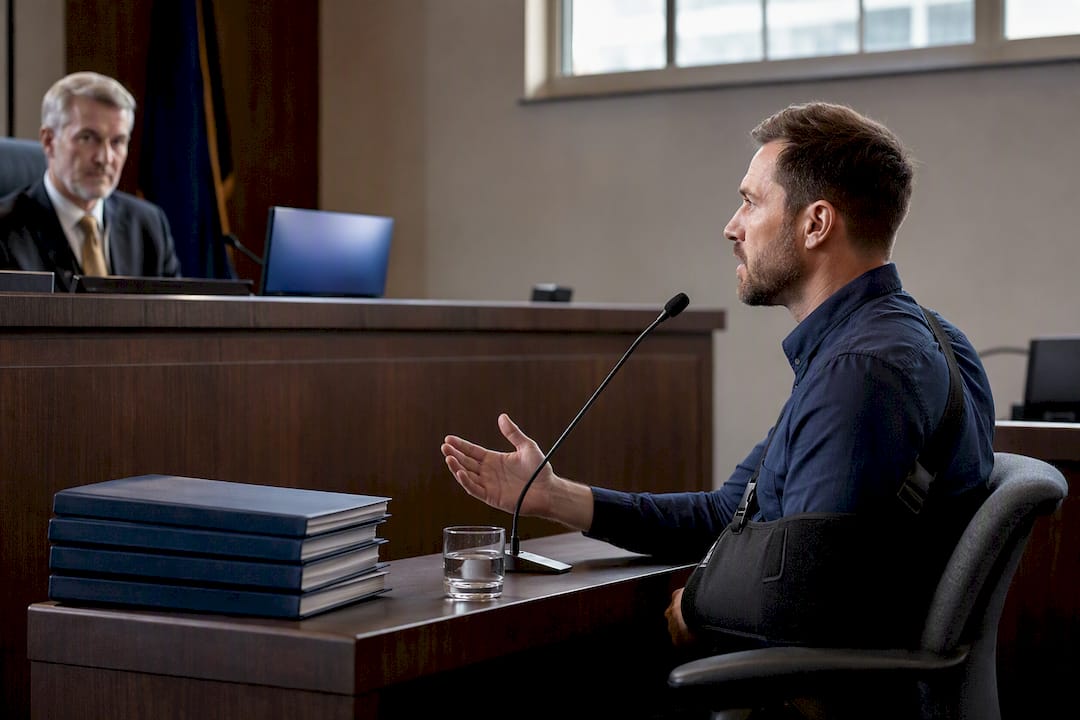
The hearing is not an informal conversation. It is a formal proceeding under the Utah Administrative Procedures Act, with testimony given under oath and live cross-examination from the insurer’s attorney.
- The judge presiding over your case will not give legal advice and will not announce a decision at the hearing itself.
- A written decision comes later by mail, often within the 45-day window described above.
- Subpoenas can compel witnesses or records, but requests must follow the Commission’s procedural rules and deadlines.
- Witness lists and exhibits generally must be disclosed to the other side ahead of time, and an independent medical examination (IME) scheduled by the insurer may become part of the record.
- The hearing record becomes the foundation for any later review, so evidence you fail to introduce here is difficult, and sometimes impossible, to add on appeal.
Pro Tip: Treat the hearing as your one real chance to build the record. Bring every document and witness you might need rather than assuming you can supplement later.
The Employees’ Guide to appealing a workers’ compensation claim denial walks through discovery obligations, subpoena procedures, and the ALJ’s role in more detail, and reading it before your hearing date is worth the time.
Discovery and a practical evidence checklist to prepare before the hearing
Between filing and the hearing, both sides exchange evidence through discovery. This stage decides whether the judge sees a complete picture of your injury and its connection to your job.
- Collect medical records, IME reports, employer incident reports, wage statements, and treatment notes from every provider who saw you.
- Use your Form 113a or 113b as a running summary rather than starting it from scratch right before the hearing.
- Respond to discovery requests and deposition notices on time and completely. Missing or late responses can put your entire claim at risk of dismissal.
- Organize your exhibits into labeled sections or a binder, with a simple one-page timeline of the injury and treatment.
- Mark the exact passages in medical records that connect your injury to your work duties so you can find them quickly during testimony.
Pro Tip: Highlight the two or three sentences in your medical file that most clearly link the injury to your job. Judges appreciate not having to hunt for the connection.
Do you need a lawyer? What legal representation looks like in Utah workers’ comp appeals
You are allowed to represent yourself at a Utah workers’ compensation hearing, but the process is formal, and the insurance company will almost always send an attorney. That imbalance is worth weighing seriously before you decide to go it alone.
- Self-representation is permitted, but the judge cannot help you with strategy, evidence rules, or procedure during the hearing.
- Attorney fees in these appeals follow Commission rules, generally structured as a percentage of the award or an add-on fee agreed upon through the Appointment of Counsel form, rather than an hourly retainer paid up front.
- Disputed causation, claims involving permanent disability, or cases with multiple insurers or employers named as defendants are strong signals that professional representation will help.
The Employees’ Guide to appealing a workers’ compensation claim denial confirms that attorney compensation in these cases runs through Commission-approved arrangements, not open-ended hourly billing.
How incomplete filings are handled: the 60-day refile consequence
An Application for Hearing missing its required attachments does not just get flagged. The Commission returns it to you without action, meaning your case has not actually started yet, even though you thought you filed on time.
This matters because of what comes next. If you do not correct and resubmit a returned Application within 60 days, it can be dismissed without prejudice, which means you would need to start the filing process over from the beginning. That delay can push your claim months further from resolution and, in some cases, brush up against other deadlines tied to your original injury date.

The official Form 001 instructions spell out this 60-day window explicitly, and it is one of the clearest reasons to double-check every attachment before you submit anything. A second returned filing wastes time you may not have, particularly if you are also managing medical treatment and lost wages.
The safest approach is to treat the required forms checklist as non-negotiable. Confirm that Form 113a or 113b, Form 307, and Form 308 are complete, signed, and attached before the Application ever leaves your hands, whether you are mailing it, faxing it, or sending it by e-mail.
Common reasons for denial of workers’ compensation claims in Utah
Understanding why claims get denied in the first place helps you build a stronger appeal. Denials typically fall into a handful of recurring categories.
Insurers often dispute whether the injury actually happened on the job, especially when there was no witness or immediate incident report. Gaps between the date of injury and the date you sought treatment can also raise doubts about causation. Pre-existing conditions are another frequent sticking point, with insurers arguing that a prior injury or degenerative condition, not the workplace incident, explains your symptoms.
Missed deadlines for reporting the injury to your employer or filing your claim can trigger a denial regardless of the injury’s severity. Incomplete medical documentation, particularly a treating provider’s failure to explicitly connect the injury to work duties, gives insurers an opening as well.
Whatever the stated reason, your Application for Hearing and its supporting medical summary are your opportunity to address the specific objection head-on, rather than repeating the same paperwork that led to the denial in the first place.
How to request and submit additional evidence or medical records after filing the appeal
Filing your Application for Hearing does not close the door on new evidence. Utah’s process expects your case to develop through discovery, and that includes gathering records that were not available when you first filed.
If a treating provider generates new notes, test results, or an updated diagnosis after your Application is on file, you can submit those records to the Adjudication Division and to the opposing party as supplemental evidence. The same applies to IME reports scheduled by the insurer once they become available.
Requests to providers for updated records typically use the same Authorization to Disclose Health Information you already filed as Form 308, so keep a copy on hand rather than filling out a new one every time. Submissions generally go through the same filing channels used for your original Application, including the casefiling e-mail addresses maintained by the Commission.
Because discovery deadlines are tied to your hearing date, submit new records as soon as they exist rather than waiting until close to the hearing. A late submission risks objection from the other side and may not make it into the record at all, undermining the very evidence you are trying to add.
Explanation of the role and procedures of the Utah Labor Commission Appeals Board
If you disagree with the administrative law judge’s written decision, the next stop is not automatically a courtroom. You first file a Motion for Review, and depending on how the Commission is structured for your case, that motion may go to the Labor Commissioner or to the Appeals Board.
The reviewing body can affirm the ALJ’s decision, modify it, reverse it outright, or send the case back down for further proceedings. This review is based on the existing hearing record rather than a new evidentiary hearing, which is part of why building a complete record at your original hearing matters so much.
The Utah Code provisions governing appeals and review set the 30-day window for filing a Motion for Review after the ALJ’s decision. Miss that window, and the ALJ’s decision typically becomes final, closing off further review within the agency.
Only after this internal review is exhausted can a party seek further appeal to the Utah Court of Appeals, and that review is limited to the administrative record rather than a fresh look at the facts.
Possible outcomes of a workers’ compensation appeal and next steps after a decision
A hearing decision generally lands in one of a few places. The judge may affirm the original denial, reverse it and award benefits, or grant only part of what you requested, such as approving medical treatment while denying a claim for permanent disability.
If you win outright, the next step is making sure the insurer complies with the ordered benefits, whether that means resuming payments, authorizing treatment, or paying a lump sum. If the decision goes against you, or only partially in your favor, you have the 30-day Motion for Review window described earlier to ask the Commissioner or Appeals Board to take another look.
A remand sends your case back to the ALJ level, often because the reviewing body wants clarification on a specific factual or legal point, which can add more months to the process rather than closing it.
Whatever the outcome, keep a copy of every written decision and note the exact date it was mailed. That date, not the date you happen to read it, is usually what starts your next appeal clock running.
Tips for effectively presenting testimony and evidence during the hearing
How you present your case at the hearing matters as much as what evidence you bring. A judge who has to dig through disorganized records to find the point you are making is less likely to find it compelling.
Speak plainly about how the injury happened and how it has affected your ability to work, without exaggerating or minimizing symptoms. Insurers’ attorneys will cross-examine you, and consistency between your testimony and your medical records carries real weight.
When referencing a document, tell the judge exactly where to look, such as a specific page or date, rather than describing it in general terms. If you have a treating provider willing to testify or submit a written statement, make sure that statement directly addresses the causation question the insurer raised in its denial.
Practice describing your injury’s timeline out loud before the hearing so it comes across naturally rather than rehearsed. A clear, chronological account, backed by the exhibits you have already organized and labeled, tends to land better than a scattered one.
Overview of settlement options during or after the appeal process
Not every appeal ends in a hearing decision. Utah workers’ compensation cases can settle at various points, whether shortly after the denial, during discovery, or even after a hearing while a Motion for Review is pending.
Settlements typically resolve disputed issues like the extent of permanent disability, future medical treatment, or a lump sum in exchange for closing out the claim entirely. Because settlement terms can affect your right to future medical care or benefits, it is worth understanding exactly what you are giving up before signing anything.
Some settlements are negotiated directly between the injured worker and the insurer, while others happen with both parties’ attorneys involved and may require Commission approval depending on the terms. Settling does not require withdrawing your Application for Hearing until terms are finalized, so you generally do not lose your place in the process by exploring settlement while your case is pending.
Whether settlement makes sense depends heavily on the strength of your medical evidence and how confident you are in the outcome of a full hearing, which is part of why the preparation described earlier in this guide matters regardless of which path your case eventually takes.
Paralegal perspective: practical lessons from preparing Utah hearings
Working through Utah workers’ comp appeals, the same small mistakes come up again and again: a missing signature on Form 308, a medical summary written the week before the hearing instead of built as records come in, or a client who assumed a document could be added after the fact. Double-checking every form before it leaves your hands, and starting your medical summary early, saves real time later. Discovery deadlines arrive faster than expected once the case is moving.
— Paralegal
How Loayza Law can help with your Utah workers’ comp appeal
Preparing an Application for Hearing correctly the first time, then building a hearing record strong enough to survive review, is exactly the kind of work an attorney handles daily. Loayza Law represents injured workers through the Utah appeals process, from filing through the evidentiary hearing and beyond.

Our workers’ compensation services include:
- Reviewing your denial and preparing a complete Application for Hearing with all required forms attached.
- Managing discovery, including record requests, witness preparation, and responses to the insurer’s attorney.
- Representing you at the evidentiary hearing and, where needed, through a Motion for Review or further appeal.
Fees in these cases generally follow Commission rules, structured as a percentage of any award or through an Appointment of Counsel arrangement, rather than an upfront hourly retainer. Bring your denial letter, medical records, and any forms you have already started to an initial consult. Visit our workers’ compensation practice page to reach our Salt Lake City team, or explore our full practice areas if your situation involves other legal issues as well.
Authoritative Utah forms and guidance (links you need to file and prepare)
- Contact the Division of Adjudication directly through the workers’ compensation claim denial page for filing addresses and e-mail contacts.
This article is general information, not a substitute for advice from a qualified lawyer. Consult a qualified legal professional about your own circumstances before acting on anything here.
FAQ
Can I appeal my workers’ comp decision?
Yes. You can file an Application for Hearing with the Utah Labor Commission’s Adjudication Division to challenge a denial, and if you disagree with the resulting decision, you can file a Motion for Review within 30 days.
Can I get a workers’ comp waiver in Utah?
Utah law generally requires most employers to carry workers’ compensation coverage for their employees, though certain categories of workers, such as some independent contractors or sole proprietors, may fall outside standard coverage requirements. Whether a specific job qualifies for an exemption depends on the facts of the working relationship, so check with the Utah Labor Commission or a qualified attorney about your particular situation.
What states don’t require workers comp coverage for all employers?
Coverage rules vary significantly by state, with some allowing exemptions for very small employers or specific industries. Because this article focuses on Utah’s appeal process, readers researching other states should confirm current requirements directly with that state’s labor or workers’ compensation agency.
How long does it take to appeal a workers’ comp denial in Utah?
After you file, the employer or insurer has 30 days to respond, and the Commission schedules the hearing no sooner than 120 days after that response is due. A written decision typically follows the hearing within about 45 days, so the full process often runs several months from start to finish.