

The District of Utah court filing fee is $338 for Chapter 7 and $313 for Chapter 13, and attorney fees come on top of that. In Chapter 13, the court’s presumptive attorney fee awards run from $2,800 to $5,100. Installments, fee waivers and attorney payment plans can ease the up-front burden.
TL;DR:
- Chapter 7 filers below 150% of the applicable poverty line may request a filing fee waiver, but only the court decides after an official application.
- Chapter 7 installment applications accompany the petition, and the petition package sets a $100 initial minimum payment; personal checks are not accepted by the clerk.
- Chapter 13 trustee fees and attorney compensation come out of monthly plan payments, while missed required fee deadlines can lead to dismissal.
- Attorney quotes can rise when cases involve contested creditors, asset disputes, business debts, or extra paperwork, so get covered services and extra charges in writing.
Table of Contents
- What are the core bankruptcy costs in Utah at a glance?
- What goes into Chapter 7 costs in Utah?
- What goes into Chapter 13 costs in Utah?
- How can you pay for bankruptcy over time or reduce the cost?
- Why do bankruptcy attorney fees vary, and what should you ask?
- What should you do next to get an accurate estimate?
- How do bankruptcy costs compare with debt negotiation or consolidation?
- What does the bankruptcy timeline look like, and when do costs hit?
- What ancillary costs can come up during a bankruptcy case?
- What court-related costs come after the filing fee?
- What we see in cost conversations with clients
- How can Loayza Law help you estimate and manage the cost?
- FAQ
- Sources
What are the core bankruptcy costs in Utah at a glance?
Most of the price of a Utah bankruptcy comes from the court’s charges and your attorney’s charges. The court side is fixed and published. The attorney side depends on your case, and in Chapter 13 the District puts a presumptive range on it.
| Cost item | Chapter 7 | Chapter 13 |
|---|---|---|
| Court filing fee (District of Utah) | $338 | $313 |
| Presumptive attorney fee award | Not applicable | $2,800 to $5,100 |
Those figures come from the District of Utah filing fee page and General Order 24-002. Chapter 7 attorney fees are set by each firm rather than by a court schedule. Beyond those numbers, expect a few routine items:
- Credit counseling before you file, and a debtor education course before discharge
- Trustee and administrative charges, which are handled differently in each chapter
- Small incidental costs such as credit reports or property valuations, covered later in this guide
What goes into Chapter 7 costs in Utah?
A Chapter 7 case has several predictable costs: the court fee, the attorney’s fee, and required courses. The court’s filing fee for Chapter 7 is $338, collected when the petition is filed. Attorney fees for Chapter 7 are usually quoted as a flat fee, which typically covers preparing the petition and schedules, attending the meeting of creditors, and handling routine questions from the trustee. What a flat fee includes should be spelled out in writing before you sign.
If your income is low, you may not have to pay the filing fee in full. The U.S. Trustee Program explains that the court may waive the Chapter 7 fee for individuals with income below 150% of the applicable poverty line, but only the court decides, and you must file the official application.
Keep these practical points in mind:
- Credit counseling and debtor education each carry a provider fee, usually modest, and reduced or free options exist for lower-income households.
- The clerk’s office does not accept personal checks, so plan on a money order, cashier’s check or another approved method.
- A waiver or installment request is made with your petition, not after the case is open.
Pro Tip: Ask your attorney to confirm in writing whether the quoted flat fee includes the filing fee, the two courses, and any amendments the trustee requests.
What goes into Chapter 13 costs in Utah?
Chapter 13 works differently because you pay through a repayment plan. The plan’s duration depends on your circumstances. Our guide to Chapter 13 plan length explains how the income test decides which applies. The court filing fee is $313, and as in Chapter 7, you can pay it at filing or ask to pay in installments.
The bigger number is attorney compensation. Under General Order 24-002, the District of Utah set presumptive Chapter 13 attorney fee awards from $2,800 to $5,100, effective January 1, 2025, with adjustments every two years starting in 2027. In practice, that fee is usually built into the plan, so you pay it over time rather than all at once.
Other plan-related costs to expect:
- Trustee fees, taken from your plan payments as the trustee disburses funds
- Administrative expenses and attorney compensation, which are paid ahead of many unsecured creditors
- Possible extra fees if you later convert the case to another chapter or need the court to rule on a motion
The federal courts’ Chapter 13 overview notes that failing to pay required fees can lead to dismissal, so keep that timeline in mind. For a side-by-side look at which chapter suits you, see our article on Chapter 7 vs 13.
How can you pay for bankruptcy over time or reduce the cost?
You do not always need the full amount on day one. The court offers structured options, and each has to be requested the right way.
- Ask to pay the filing fee in installments. The Chapter 7 petition package describes an initial minimum payment of $100, and the court’s installment rules set the schedule and final deadline. You submit the application with your petition.
- Apply for a fee waiver if you qualify. The official waiver application is part of the same petition package. The court, not your attorney, makes the decision.
- Use reduced-cost counseling. Approved credit counseling agencies must offer free or reduced-rate services to eligible clients, and the same applies to the post-filing course.
- Pay by an accepted method. Because the clerk does not take personal checks, many attorneys route payments through a trust account.
Fee relief threshold: Approved credit counseling agencies must offer reduced-rate or free counseling to clients with household income below 150% of the federal poverty level, so ask about that rate before you pay full price.
Why do bankruptcy attorney fees vary, and what should you ask?
Two Utah cases with the same filing fee can end up with very different legal bills. Several factors drive the cost:
- Contested matters, such as a creditor objecting to a discharge
- Asset sales or disputes over property the trustee wants to liquidate
- Adversary proceedings, which are lawsuits within the bankruptcy case
- Secured claims, such as vehicles or a home, that need negotiation
- General complexity, including business debts or multiple years of income records
Chapter 7 is commonly quoted as a flat fee, while Chapter 13 fees follow the plan and the District’s presumptive awards. That means a straightforward Chapter 13 can be easier to predict than a contested Chapter 7.
When you compare quotes, ask:
- What exactly does the fee include, and what triggers extra charges?
- When are payments due, and can they be split?
- Does the quote include the court filing fee, or is that separate?
- Who handles creditor calls and trustee requests?
Filing without a lawyer is allowed, but mistakes in schedules or exemptions can cost you property or delay discharge, so counsel is worth considering whenever assets, a contested creditor or a business is involved.
Pro Tip: Get any fee quote in writing, with the scope of services listed, before you pay a retainer.
What should you do next to get an accurate estimate?
A reliable estimate comes from your actual numbers, not averages. Work through this list before a consultation:
- Gather your last two federal tax returns and recent pay stubs.
- List every debt, with creditor names, balances and whether it is secured.
- Collect titles and loan statements for any vehicle or real estate.
- Write down questions about fees, payment timing and what happens if you cannot pay everything at once.
- Ask for a written fee estimate and confirm how the filing fee will be handled.
Filing quickly matters too. Once a case is filed, the automatic stay generally pauses most collection activity, and the payment options above mean limited funds do not have to block you from filing. If your situation involves a vehicle, our page on keeping your car after bankruptcy in Utah can help you prepare.
How do bankruptcy costs compare with debt negotiation or consolidation?
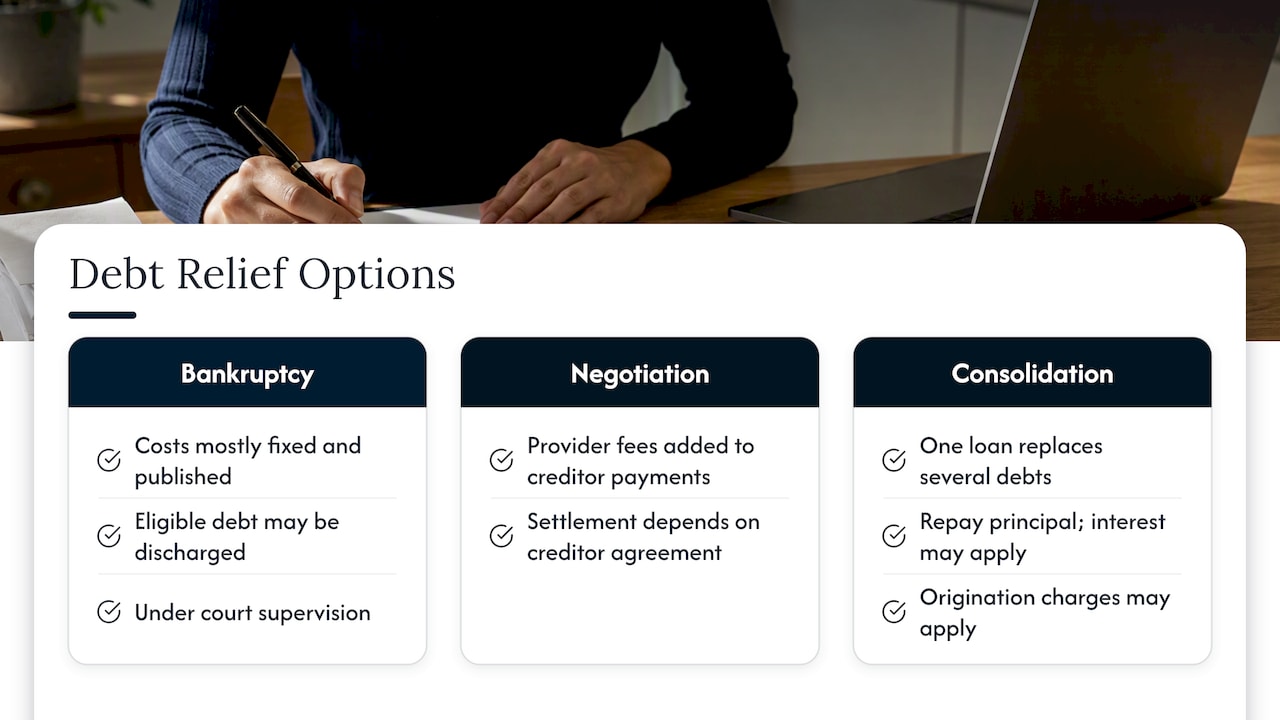
Bankruptcy is not the only route, and cost is only one part of the comparison. Debt negotiation and debt consolidation each carry their own charges, and those vary widely by provider and by how much you owe. Because we do not have a sourced Utah price for either, we will describe the structure rather than put numbers on it.
Debt negotiation programs generally charge the provider’s fees on top of what you eventually pay creditors, and they depend on creditors agreeing to settle. Consolidation loans replace several debts with one, but you still repay the principal, and interest and origination charges can apply. If you have tax debt, an IRS installment agreement is another option to look at, and this CPA guide to IRS installment fees explains when handling it yourself makes sense and when professional help pays off.
Bankruptcy differs in two ways. Its costs are mostly fixed and published, from the court filing fee to the Chapter 13 presumptive range. And it is the only option here that can discharge eligible debt under court supervision rather than rely on creditor cooperation. The right choice depends on your debts and whether you have income to repay. A short consultation compares your real numbers against each path.
What does the bankruptcy timeline look like, and when do costs hit?
Costs arrive in a fairly predictable order. Here is the typical sequence in Utah, with where each charge lands.

Before filing. You complete credit counseling and pay the provider’s fee, which may be reduced or free if your income qualifies. You also gather documents and, if you hire counsel, pay or arrange the attorney’s fee.
At filing. The court filing fee is due: $338 for Chapter 7 or $313 for Chapter 13, unless you have an approved installment schedule or waiver. This is also when the automatic stay begins.
Meeting of creditors. Shortly after filing, you attend a meeting with the trustee. This step generally adds no separate court charge, though attorney time spent on it is part of the fee you agreed to.
During the case. In Chapter 7, the trustee reviews your assets, and extra attorney fees can arise if there are contested issues. In Chapter 13, you make plan payments each month, and trustee fees and attorney compensation come out of them.
Before discharge. You complete the debtor education course and pay its provider fee.
After discharge. Chapter 7 cases typically wrap up faster than Chapter 13, which runs for the length of the plan. Our article on Chapter 13 plan length explains how plan length varies.
What ancillary costs can come up during a bankruptcy case?
Beyond the headline fees, some cases involve smaller costs that depend on what you own and what the trustee or creditors dispute. None of these are guaranteed, and many cases have none of them, but it helps to know they exist.
- Property appraisals. If you own real estate or valuable personal property, a valuation may be needed to support exemptions or to respond to a trustee’s questions. The cost depends on the appraiser and the property.
- Credit reports. Pulling your reports helps make sure every creditor is listed. Free annual reports are available to consumers, so you may not need to pay.
- Expert witness fees. These are uncommon and arise only in contested matters, such as a dispute over a business’s value.
- Business-related costs. If your debts come from a business, additional records and filings can add expense, and our page on Utah small business bankruptcy costs covers how that differs.
- Amendments and extra paperwork. If the trustee asks for corrected schedules, some firms include that in the flat fee and others bill it separately.
The best protection is to ask about these at your first consultation and to get the answer in writing. A clear scope of services means a surprise charge is the exception, not the rule.
What court-related costs come after the filing fee?
The filing fee is the visible court charge, but the system has other built-in expenses, and which ones apply depends on your chapter.
In Chapter 13, the trustee’s fee is the main one. It is deducted from the payments you make into your plan, so you do not write a separate check for it. The federal courts’ Chapter 13 guidance notes that courts charge a filing fee along with an administrative fee, both normally paid at filing, and that installment schedules have limits and final deadlines. Missing those deadlines can lead to dismissal, which would mean the money and effort spent so far is lost.
Administrative expenses in a Chapter 13 plan also include attorney compensation, which the District’s presumptive award range of $2,800 to $5,100 helps set. These are paid ahead of many unsecured creditors, which is why they shape how much of each plan payment actually reaches your debts.
If a case changes direction, for example by converting from one chapter to another, additional court fees can apply. Motions filed during the case may also carry their own charges. In Chapter 7, the trustee is generally compensated from the estate rather than billed to you, so the court-side costs you feel most are the filing fee and any installment deadlines. Keeping every payment on time is the simplest way to avoid adding cost.
What we see in cost conversations with clients
Most people ask the same thing first: how much do I need to have in hand to file? The honest answer is usually less than they fear, because installments, waivers and plan-funded fees spread the burden. We would rather you gather your documents and ask pointed questions than put off a decision because of a number you have not verified. Run through the checklist above before you schedule, and a consultation becomes much more useful.
— Paralegal
How can Loayza Law help you estimate and manage the cost?

We handle bankruptcy in Utah. We can discuss payment approaches that fit your situation. Our fees depend on your case; current pricing details are on our website.
- Bring your tax returns, pay stubs and debt list
- Ask for a written fee estimate
- Tell us about any income limits so we can discuss waiver and installment options
To get started, visit our practice areas page and request a consultation today.
This article is general information, not a substitute for advice from a qualified lawyer. Consult a qualified legal professional about your own circumstances before acting on anything here.
FAQ
Can I file Chapter 7 if I earn over $100,000?
Possibly, but high income can trigger a means test that affects eligibility. Whether you qualify depends on your household size, expenses and the type of debt, so it needs a case-specific review. Our comparison of Chapter 7 and Chapter 13 explains where each fits.
How much do you pay back in Chapter 13?
It depends on your income, your debts and what you would owe creditors if you filed Chapter 7. Your plan must cover required costs, including trustee fees and attorney compensation, with the District’s presumptive attorney awards ranging from $2,800 to $5,100.
Does Chapter 7 wipe out all your debt?
No. Chapter 7 discharges many unsecured debts, but some obligations survive, and secured debts such as car loans may still require payment if you want to keep the property. An attorney can tell you which of your debts qualify.
What does it cost to file in Utah?
The court filing fee in the District of Utah is $338 for Chapter 7 and $313 for Chapter 13. Attorney fees, credit counseling and debtor education are separate.