

Parole in place (PIP) is a discretionary grant from U.S. Citizenship and Immigration Services (USCIS) that lets a person who entered the United States without being admitted stay in the country for a set period without fear of removal during that time. The version most people search for is military parole in place: it is available to the spouse, widow(er), parent, son or daughter of a qualifying service member, and it can open the door to a Green Card without leaving the country. We handle immigration matters for families in Utah, and the pattern we see in this area is consistent: the form is short, but a weak file, a missed document or a misunderstood limit can cost a family a year or more.
TL;DR
- USCIS may grant military parole in place case by case, in one-year increments, to the spouse, widow(er), parent, son or daughter of an active-duty member, a Selected Reserve member or a veteran who was not dishonorably discharged.
- It is only for people who are present without admission. Someone who was lawfully admitted and overstayed does not qualify.
- Approval stops unlawful presence from building during the parole period and can satisfy the “inspected and paroled” requirement for adjustment of status. It does not give a Green Card by itself.
- Prior criminal history or earlier immigration violations can change the outcome, so review the whole record before filing.
Table of Contents
- What parole in place is
- Who qualifies for military parole in place
- What approval gives you
- How to apply for military parole in place
- What does it cost
- Common mistakes that cost families time
- Who should get a lawyer involved
- Our perspective
- Talk to our immigration team
- FAQ
- Sources
What parole in place is
Under section 212(d)(5)(A) of the Immigration and Nationality Act (INA), the Department of Homeland Security can parole a person who is applying for admission, for urgent humanitarian reasons or significant public benefit. A person who crossed the border without inspection is still treated as an applicant for admission, and a 2013 USCIS policy memo (PM-602-0091) explains that this is what makes them eligible for parole in place. The memo traces the policy to a 2010 commitment by the Secretary of Homeland Security to reduce family separation among military families and to help them adjust status inside the United States.
The military version has a clear purpose. According to a March 2026 Fort Bliss legal office paper, the government recognizes that service members carry real stress over their families’ immigration status, and PIP lowers the risk of separation so they can focus on their duties.
Parole in place is not a visa and not permanent status. It is a temporary permission that USCIS grants at its discretion. The word “parole” here has nothing to do with criminal parole.
Who qualifies for military parole in place
Two questions decide eligibility: who is the sponsor, and what is your relationship to them.
Qualifying service members
Per USCIS, the sponsor can be:
- a current member of the U.S. armed forces on active duty;
- an individual in the Selected Reserve of the Ready Reserve;
- a former member who served on active duty or in the Selected Reserve and was not dishonorably discharged.
The Fort Bliss paper adds that veterans qualify whether they are living or deceased, which matters to widows and widowers and to families who lost a service member.
Qualifying family members
The applicant can be the spouse, widow(er), parent, son or daughter of the sponsor. The word “sons and daughters” is deliberate. A 2016 USCIS memo replaced “children” with “sons and daughters”, so adult and married sons and daughters can qualify, not only those under 21.
The entry requirement
The applicant must be present in the United States without admission. USCIS states that individuals who were lawfully admitted and then overstayed are not eligible. If you entered with a visa, a border crossing card or any other inspection, the analysis is different, and you should have your entry history reviewed before anything is filed. Our Salt Lake City immigration team works through entry questions like this with families regularly.
How much weight the family tie carries
The 2013 memo says the fact that an applicant is the spouse, child or parent of an active-duty member, Selected Reserve member or former service member ordinarily weighs heavily in favor of parole in place. Absent a criminal conviction or other serious adverse factors, it says PIP is generally an appropriate exercise of discretion. That sentence is encouraging, and it also tells you where the risk sits: criminal history and other serious negative factors. If a DUI or any arrest is in the picture, read our guide on immigration consequences after a DUI first.
Families in these situations often have other financial decisions in front of them. A service member or veteran planning a home purchase may want to look at VA home loan options for veterans, which are available for eligible service members and run on their own rules separate from any immigration filing.
What approval gives you
The Fort Bliss paper lists what an approved applicant receives:
- Permission to remain in the United States in one-year increments, with re-parole possible.
- No further accrual of unlawful presence during the parole period.
- Protection from removal during the parole period.
- Form I-94 as evidence of the parole.
- Eligibility to apply for an employment authorization document (EAD) on Form I-765.
- Satisfaction of the “inspected and paroled” prerequisite for adjustment of status.
USCIS also created a Military Parole in Place (MIL) class of admission, replacing the general public interest parolee class. It notes that MIL parolees are not employment-authorized just because they were paroled. They must apply for and receive an EAD. Plan for that second filing from the beginning, and if you already hold a work permit, our page on work permit renewal timing explains how early to file to avoid a gap.
Why the Green Card bridge matters
Most people file for PIP because of what comes next. Adjustment of status under INA section 245(a) requires that you were “inspected and admitted or paroled.” A person who crossed without inspection normally cannot meet that requirement and may have to leave the country for a consular interview, which can trigger the three-year or ten-year bars on returning. As the Fort Bliss legal office explains, PIP satisfies the “paroled” requirement, so many people can pursue the Green Card process from inside the country and avoid that departure.
What approval does not do
For your planning, these limits matter as much as the benefits:
- It is not a Green Card and not permanent status.
- It does not erase unlawful presence that built up before the parole period.
- It does not waive other grounds of inadmissibility, such as criminal convictions or security concerns.
- Under INA section 245©(2), PIP does not cure unlawful status. According to the same Fort Bliss source, only immediate relatives of U.S. citizens (spouses, parents and unmarried children under 21) are exempt from that bar, so families of permanent resident sponsors face a harder path.
The last point is the one families most often miss. A spouse of a U.S. citizen service member is usually in the strongest position. An adult son or daughter, or a family attached to a permanent resident service member, needs a careful look at the Green Card route before PIP is filed, so that the parole actually leads somewhere. Our guide to adjustment of status in Utah walks through the steps that follow.
How to apply for military parole in place
Here is the process, with the point where each step usually goes wrong.
Step 1: Confirm the sponsor and the relationship
Gather proof of the sponsor’s service: a photocopy of the military ID, or a DD Form 214 for a veteran. Then gather proof of the relationship: a marriage certificate, proof that any prior marriage ended, birth certificates, or proof of enrollment in the Defense Enrollment Eligibility Reporting System (DEERS). USCIS lists these on its military discretionary options page.
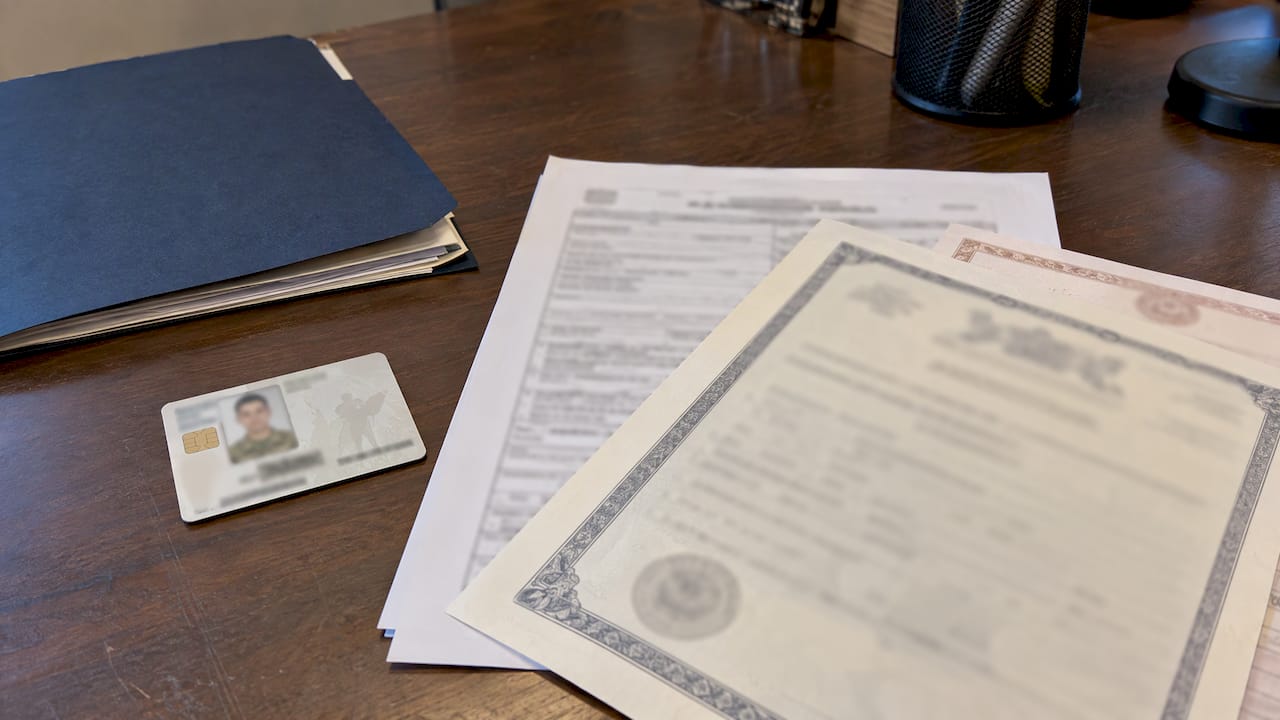
Where it goes wrong: names that differ between documents, a missing divorce decree for an earlier marriage, or a foreign document with no certified English translation. The Fort Bliss paper states that all non-English documents need certified translations.
Step 2: Complete Form I-131
The application is Form I-131, Application for Travel Document. For an initial military PIP request, USCIS directs you to check Item 8.A. For re-parole, it is Item 10.H. Despite the form’s name, you are not asking for a travel document.
Where it goes wrong: checking the wrong item, or leaving parts blank. A form that does not match the request can slow the case or invite a rejection.
Step 3: Add the supporting package
USCIS asks for the following:
- Relationship evidence (Step 1).
- Evidence of the family member’s military service.
- For a parent applicant, evidence that the service member supports the application.
- Two identical color passport-style photographs.
- Any additional favorable discretionary factors.
The Fort Bliss paper adds practical items that strengthen the file: a cover letter, a letter explaining how the applicant entered the country, a letter from the service member describing the hardship of separation, the sponsor’s and beneficiary’s birth certificates, and the beneficiary’s identification.
Where it goes wrong: treating discretionary factors as optional. Because PIP is discretionary, this is where you present the whole person: length of residence, family ties, community ties, work history and the hardship the service member would face. A thin package gives the officer little to weigh. The way you explain your entry also deserves care, because that letter becomes part of your permanent immigration record. Having an attorney review it before it is filed is a sensible safeguard.
Step 4: File at the correct address
USCIS uses a direct filing address for military PIP Form I-131 requests based on where you live. Check the current address on the USCIS page for your residence before you mail anything, since addresses and form editions change.
Where it goes wrong: using an old address or an outdated form edition. USCIS posts form updates on its forms updates page, and it is worth checking the edition before you file.
Step 5: Track the decision and calendar the expiration
Parole is granted in one-year increments. If you want re-parole, request it with Item 10.H on a new I-131 well before the I-94 expires, rather than waiting for the last month. Treat the expiration date as a hard deadline.
Step 6: Apply for the work permit and plan the Green Card filing
Once paroled, you can file Form I-765 for an EAD. When the family relationship and your history support it, the Green Card application can follow. If an application is ever denied, our page on what to do after an I-485 denial explains the options.
What does it cost
Fees in this area change, and the figures depend on the form and the year. The Federal Register notice published July 22, 2025 listed FY2025 parolee EAD fees of $550 for an initial application and $275 for a renewal or extension. It also lists a $795 fee for a family military PIP EAD upon re-parole, with a $520 fee waiver available, along with re-parole fees of $1,425 on paper and $1,325 online. These figures reflect that notice for that fiscal year. Before you file, confirm the amount for your exact request against the current USCIS fee schedule, because filing with the wrong fee leads to rejection.
Common mistakes that cost families time
- Assuming PIP equals a Green Card. It is a bridge, and the adjustment application is a separate case with its own requirements.
- Ignoring criminal history. Convictions and arrests, including old ones, can turn a routine request into a denial. Gather certified dispositions early.
- Filing when the applicant was lawfully admitted. A person who entered on a visa and overstayed is outside this program.
- Skipping the hardship letter. The service member’s own account of the separation burden is a favorable factor the officer can weigh.
- Letting parole lapse. Because parole is time limited, a missed re-parole request can leave you without the protection you thought you had.
- Overlooking other options. Some families need a waiver instead of, or after, parole. For a U.S. citizen spouse, our guide on building an I-601A hardship file covers that route.
Who should get a lawyer involved
Every PIP case is discretionary, and several scenarios deserve a full review before filing: any arrest or conviction, a prior removal order or deportation, previous entries into the United States, a sponsor who is a permanent resident rather than a citizen, and an adult son or daughter with their own immigration history. If any of these apply, speak with an immigration attorney before you send the application. In Utah, that is our team.
Our perspective
Families come to us after a service member has spent years serving this country while a spouse or parent lives with the fear that one stop or one letter could split the household. Military parole in place exists to address exactly that fear, and it works best when the file is built with care.
What we have learned from our work in immigration is that the form itself is rarely the hard part. The hard part is deciding what comes after parole. A grant that is not tied to a clear route to a Green Card only postpones the question, so we start by looking at the sponsor’s status, the applicant’s entry and any history that could surface, then build the request around the whole path.
We approach every case with the same commitment to integrity and responsiveness that our clients expect, and with a multicultural perspective that helps us understand the families we serve. If you or a relative is in this situation, we would like to hear your story and help you plan the next step.
Paralegal
Talk to our immigration team
Loayza Law represents individuals and families in immigration matters in Utah. If you think a family member may qualify for military parole in place, we can review the sponsor’s service, the relationship, the entry history and the route to a Green Card, and tell you where your file stands. See our practice areas or go straight to our Salt Lake City immigration page to get started.

Fees for legal representation depend on the matter, and our immigration team will go over how your case is handled when you contact us.
FAQ
Who does parole in place apply to?
The military version applies to the spouse, widow(er), parent, son or daughter of an active-duty service member, a Selected Reserve member, or a veteran who was not dishonorably discharged. The applicant must be present in the United States without admission. USCIS decides each request case by case.
Does parole in place give me a Green Card?
No. It gives temporary permission to stay, in one-year increments, and it can satisfy the “inspected and paroled” requirement for adjustment of status. You still must file and qualify for the Green Card itself, and a prior criminal record or other inadmissibility grounds still apply.
Can I work with parole in place?
Not automatically. USCIS explains that Military Parole in Place (MIL) parolees are not employment-authorized incident to parole. You must file Form I-765 and receive an employment authorization document before you start working.
Can adult or married children of a service member apply?
Yes. A 2016 USCIS memo extended eligibility to sons and daughters of any age, including married ones, for covered military personnel and veterans. Whether the Green Card step is available afterward depends on the sponsor’s status and the applicant’s own history.
How long does parole in place last?
USCIS may grant it in one-year increments, and re-parole is possible. Request re-parole before the expiration on your I-94, and plan the Green Card filing so that the parole period is not simply running out.
Sources
- USCIS: Discretionary Options for Military Members, Enlistees and Their Families
- USCIS Policy Memorandum PM-602-0091, November 15, 2013
- USCIS 2016 memo: Discretionary Options for Designated Spouses, Parents, and Sons and Daughters
- Fort Bliss SJA Info Paper: Military Parole in Place, March 5, 2026
- Fort Bliss: Military Parole in Place, a Vital Support Mechanism
- USCIS: New Class of Admission for Military Parole in Place (MIL)
- Federal Register, July 22, 2025: USCIS fee notice
- USCIS Forms Updates