
Utah slip and fall law is premises liability law. If you were hurt because a property owner or occupier failed to keep a place reasonably safe, you may be able to recover compensation. You generally have four years to file a lawsuit against a private owner. Your own share of fault can reduce or erase your recovery. Claims against a city, county or state agency follow much stricter rules, and missing one early notice step can end a strong case.
This guide explains those rules in plain terms, shows what evidence tends to matter, and covers the situations that catch people off guard, such as falls at work and falls on public property.
TL;DR
- Utah gives you generally four years from the date of injury to sue a private property owner over a fall.
- Utah uses comparative fault: your recovery shrinks by your percentage of blame, and a fault share at the 50% mark or above bars it entirely.
- A hazard being “open and obvious” does not automatically end your case. It becomes part of the fault analysis.
- Falls on government property require a written notice of claim before you can sue. Do not wait on this one.
- If you fell while working, workers’ compensation, not a lawsuit against your employer, is usually your path.
Table of Contents
- What Utah slip and fall law actually covers
- The four-year deadline
- Shared fault: Utah’s comparative negligence rule
- What evidence makes a slip and fall claim stronger
- Falls on government property: the notice trap
- If you fell while working
- Our perspective: where we see slip and fall claims go wrong
- Steps to take in the first days after a fall
- How lawyers are usually paid in injury cases
- How Loayza Law can help
- FAQ
- Sources
What Utah slip and fall law actually covers
There is no single “slip and fall statute” in Utah. These cases are ordinary negligence claims, and courts treat them under the heading of premises liability. Negligence means failing to do what a reasonably prudent person would do in similar circumstances, as the Utah Supreme Court framed it in Hale v. Beckstead.
To win, you generally need to show four things:
- The owner or occupier owed you a duty of care. Your status on the property (customer, guest, tenant, trespasser) can affect how much care was owed.
- The duty was breached. The owner created the hazard, or knew about it, or should have discovered it through reasonable inspection, and did not fix or warn about it.
- The breach caused your fall. The hazard, not your own footwear, distraction or a medical event, has to be a real cause.
- You suffered actual harm. That means medical bills, lost income, pain and the other losses the law recognizes.
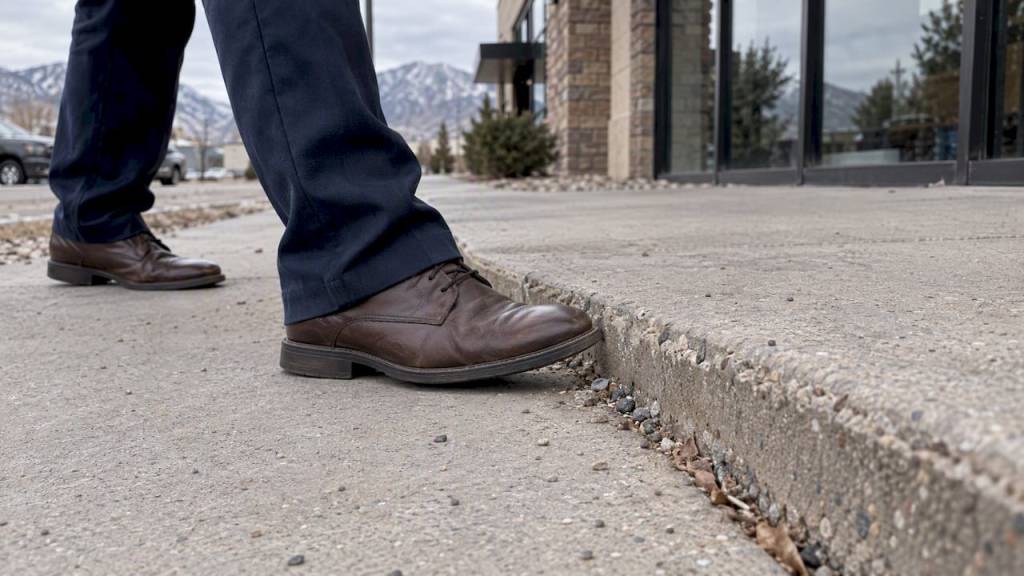
Slip, trip and fall cases vary a lot. Wet floors, torn carpet, icy parking lots, broken stairs, poor lighting and uneven concrete all fit. The legal framework stays the same; the evidence changes.
The four-year deadline
The Utah courts’ self-help pages explain that a statute of limitations is the time allowed to file a court case, and that the period varies by case type. For personal injury, including most slip and fall claims against private parties, the period is generally four years from the date of the injury.
Four years sounds generous. In practice, waiting costs you in ways the calendar does not show:
- Surveillance video is often overwritten within weeks.
- The hazard gets repaired, and the scene no longer shows what you saw.
- Witnesses move or forget details.
- Medical records must tie your symptoms to the date of the fall. A long gap invites the argument that something else caused your injury.
The four-year limit also does not apply to every defendant. Government entities and employers follow different timelines, covered below. If you are unsure which rule governs your fall, treat the shortest possible deadline as the real one until a lawyer tells you otherwise.
Our own checklist, 6 steps after a Utah slip and fall to preserve your claim, walks through the first days in more detail.
Shared fault: Utah’s comparative negligence rule
Insurers rarely accept that a fall was entirely the property owner’s fault. They look for ways to assign you a share of the blame: you were on your phone, wearing unsafe shoes, or walked past a warning sign.
Utah handles this through comparative fault. Under Utah Code § 78B-5-818, your recovery is reduced by your percentage of fault, and you are barred if your fault reaches 50%. A few examples show how this works:
| Your share of fault | Damages found | What you could recover |
|---|---|---|
| 0% | $40,000 | $40,000 |
| 20% | $40,000 | $32,000 |
| 49% | $40,000 | $20,400 |
| 50% | $40,000 | $0 |
The figures are illustrations, not predictions. They show why a one-point swing in the fault allocation can decide a case. We explain this cliff in more depth in 49% vs 50% in Utah comparative negligence.
“Open and obvious” hazards
Property owners often argue that the danger was obvious, so you should have avoided it. In Utah, that argument has lost its power as an automatic defense. In Hale v. Beckstead, the state’s highest court addressed how open and obvious dangers fit into the comparative negligence framework rather than ending a case outright. The question becomes a factual one: was it reasonable for you to proceed as you did, and what share of fault, if any, does that put on you?
That does not make obvious hazards harmless to your case. A jury can still assign you significant fault. But a defense lawyer cannot simply say “it was visible” and expect dismissal.
What evidence makes a slip and fall claim stronger
In these cases, the details of the surface and the timeline do most of the work. Here is what we would want you to gather.
Photographs and video of the exact spot. Take wide shots and close-ups, from standing height and at ground level. Include lighting, signs, mats and anything blocking the area.
Measurements of height differences. The Utah Division of Risk Management, which manages safety for state facilities, identifies wet or slippery surfaces and excessive changes in elevation as the most common causes of these accidents. Its slips, trips and falls tip sheet points to raised concrete edges, curled rugs and similar defects, and treats elevation changes greater than a quarter inch as a concern. If you can safely place a coin or a ruler beside a lip in the pavement, do it and photograph it.
Cleaning and inspection records. The same state guidance emphasizes immediate cleanup of wet surfaces and keeping logs of mitigation efforts. If a store or building owner has no log, or the log shows a long gap before your fall, that matters. These records are usually in the owner’s hands, so your attorney may need to request them early.
Witness names and contact details. Employees and other customers often saw what happened. Get names before they leave.
An incident report. Ask the business to create one, and ask for a copy. Report only the facts. Do not speculate about why you fell or say you are fine if you are not.
Prompt medical care. See a doctor soon after the fall, even if the pain seems minor. Tell the provider exactly how you were hurt. Because medical history is tied to the injury date, accurate records from the first visit protect you from the argument that your condition came from somewhere else.
The shoes you wore. Keep them, unwashed, in a bag. Footwear is a common point of dispute.
Falls on government property: the notice trap
The most dangerous mistake in Utah slip and fall law is treating a city sidewalk, a public school, a state building or a county facility like a private store. Government entities are protected by the Governmental Immunity Act of Utah. The Act waives immunity in certain situations, but it also sets conditions, and it excludes some categories of injury altogether.
Before you can maintain a lawsuit, you must file a written notice of claim with the specific governmental entity. Section 63G-7-402 of the Act covers the time for filing that notice, and the deadline is generally one year, far shorter than the four years you have against a private owner. The requirement is strictly enforced, and failing to follow it can bar the whole claim, even when the facts are in your favor.
Practical points to keep in mind:
- Identify the right entity. A road might belong to the state, a county or a city, and a building might be leased by a public agency from a private owner.
- Put the notice in writing and follow the Act’s content and delivery requirements exactly.
- Keep proof of when and how you filed.
- Recent legislative activity, including a 2025 bill amending the Act, shows these rules get updated. Confirm the current text before relying on any summary, including this one.
If your fall happened anywhere publicly owned, make this your first legal step, ahead of settlement talks and ahead of gathering every last piece of evidence.
If you fell while working
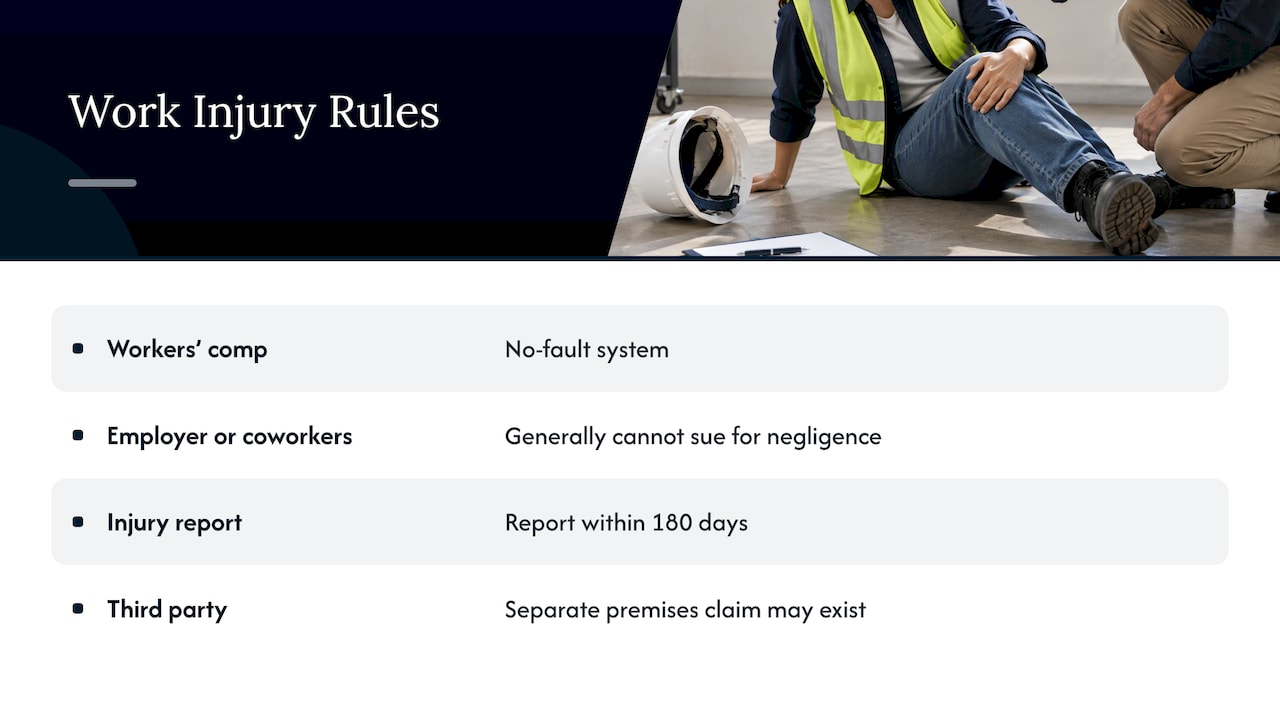
A slip and fall on the job is a different legal problem. Utah’s workers’ compensation system is no-fault. In exchange, the Workers’ Compensation Act makes the benefits the exclusive remedy against the employer, so you generally cannot sue your employer or co-workers for negligence. The Utah Labor Commission states that the employee must report the injury to the employer within 180 days to avoid losing benefits.
That does not always mean a third party escapes liability. If you were hurt at a job site owned by someone other than your employer, or on a property managed by an outside company, ask a lawyer whether a separate premises claim exists alongside your benefits claim.
For employers and facility managers, prevention is also part of the picture. Practical guidance on preventing slips, trips and falls in the workplace covers floor care and housekeeping habits that reduce these injuries before anyone is hurt.
We have written separate guides on reporting a workplace injury in Utah, filing a workers’ comp claim and what to do if your claim is denied.
Our perspective: where we see slip and fall claims go wrong
We handle personal injury and workers’ compensation matters for Utah clients, and the same few problems come up again and again. People wait because they hope the pain will pass. They give a recorded statement to an adverse insurer before they understand their injuries. They post about the fall on social media. They assume a government property case works like a store case.
We also see clients underestimate the human side. A fall can mean missed work, mounting bills and a long recovery, and many of the people who come to us are worried about all three at once. Our approach is to listen first, explain which deadline controls the case, and build a plan around the facts, not a template. Our clients include people who speak English as a second language, and we explain each step so you know what is happening and why.
One piece of advice we repeat often: do not let the four-year number set your pace. The evidence is perishable even when the deadline is not.
— Paralegal
Steps to take in the first days after a fall
- Get medical attention. Your health comes first, and records created early are the strongest proof of injury.
- Report the fall to the owner or manager. Do it in writing if possible, and ask for a copy of any incident report.
- Photograph the scene and your injuries. Do it before the area is cleaned or repaired.
- Collect witness information.
- Keep everything. Shoes, bills, receipts, medical paperwork and a short daily note on pain and missed activities.
- Be careful what you say. Do not apologize, guess at causes, or agree to a recorded statement with the owner’s insurer before getting advice.
- Check who owns the property. If it is public, start the notice-of-claim process immediately.
- Speak with an attorney early. The sooner someone can send a preservation letter for video and records, the better.
How lawyers are usually paid in injury cases
Many people hold off calling a lawyer because of cost. Injury cases are commonly handled on a contingency basis, meaning the fee is tied to the result of the case instead of billed up front. Fee arrangements vary by practice area and by firm, so ask for the terms in writing before you sign. Our explainer on how contingency fees work in personal injury cases describes what to ask.
How Loayza Law can help
If you were hurt in a fall in Utah, we can review what happened, identify who may be responsible, and tell you which deadlines apply to your situation. Personal injury and workers’ compensation are two of the practice areas we handle, and the firm has worked with more than 1,300 clients. Learn more on our Salt Lake City personal injury page, or see all of our practice areas.
FAQ
What is the statute of limitations for a slip and fall in Utah?
For most claims against private property owners, it is generally four years from the date of the injury. Claims against governmental entities require an earlier written notice of claim. Workers’ compensation has its own reporting deadline of 180 days.
Can I still recover if the fall was partly my fault?
Often yes. Utah reduces your recovery by your percentage of fault, but you are barred if your share reaches 50%. Insurers know this, so expect them to argue you were at least partly to blame.
Can I sue the city for a slip and fall?
Possibly, but the Governmental Immunity Act sets special conditions. You must file a written notice of claim with the entity before suing, and the Act also lists situations where immunity is not waived. Contact an attorney quickly if your fall happened on public property.
Does it matter if the hazard was obvious?
It matters, but it does not automatically defeat your claim. Utah courts treat an open and obvious danger as one factor in the comparative fault analysis, not as an automatic bar.
What if I fell at work?
Workers’ compensation is generally the exclusive remedy against your employer. Report the injury promptly and within 180 days, and ask a lawyer whether any third party shares responsibility.
Sources
- Statutes of Limitation, Utah Courts
- Hale v. Beckstead, Utah Supreme Court (2005)
- Utah Comparative Negligence Rule, SetCalc
- Slips, Trips, and Falls Tip Sheet, Utah Division of Risk Management
- Governmental Immunity Act of Utah, Chapter 7
- Governmental Immunity Act Amendments, 2025 bill
- Workers’ Compensation Act, Utah Code Title 34A, Chapter 2
- Employers’ Guide to Workers’ Compensation, Utah Labor Commission