

In Utah, a liquidated damages clause is usually enforced as written. The Utah Supreme Court treats it like any other term of a contract. It will set the clause aside only if the party challenging it shows it is unconscionable or a penalty, meaning an amount with no reasonable link to the loss a breach could cause. If you signed a contract with one of these clauses, or you want to rely on one, the real question is whether the number was a fair forecast or a punishment.
This guide explains how the rule works, where the line falls, and what to do before you sign, breach or sue. It is general information about Utah law, not advice on your contract. The wording of your agreement and the facts of your dispute decide the outcome.
TL;DR
- A liquidated damages clause fixes the amount owed for a specific breach in advance. Utah courts presume it is enforceable.
- The clause fails when the amount bears no reasonable relationship to the actual or likely loss, so that it works as a penalty.
- The party attacking the clause carries the burden. “The number feels high” is not enough.
- Leases, construction contracts and service agreements are where Utah disputes over these clauses tend to arise.
- Read the clause, the notice terms and the deadlines before a dispute grows. Limitation periods and interest can change what a claim is worth.
Table of Contents
- What a liquidated damages clause does
- The presumption of enforceability in Utah
- Where the penalty line falls
- Utah examples: a lease and a construction contract
- Liquidated damages and the duty to mitigate
- Related problems: penalties in service agreements
- Deadlines and interest that affect the value of a claim
- A practical checklist before you sign
- How we approach these disputes
- When to bring in a Utah attorney
- FAQ
- Sources
What a liquidated damages clause does
When a contract is breached, the injured party can normally sue for the money the breach actually cost them. Proving that figure can be slow, expensive and uncertain. A liquidated damages clause settles the question in advance: if one party breaches in a defined way (finishes late, leaves a lease early, discloses protected information), it pays a fixed or formula-based sum.
The Utah Supreme Court describes the purpose in familiar terms. Under the principle of freedom of contract, a stipulation to liquidated damages is generally enforceable. The exception arises where the amount bears no reasonable relationship to the actual damage. In that situation the clause is a penalty, and courts decline to enforce penalties.
In practice, a clause like this tends to look like one of these:
- Late completion. A set dollar amount per day that a construction project runs past its deadline.
- Early lease termination. A fee equal to a stated number of months of rent if a tenant leaves before the term ends.
- Cancellation or no-show. A fixed charge when a customer cancels a booked event or service.
- Breach of a restrictive covenant. A stated sum for each violation of a non-compete or confidentiality obligation.
These are examples of the type of clause, not a statement of what any one Utah court has approved.
The presumption of enforceability in Utah
Many people assume courts look hard at these clauses. In Utah that is not the starting point. In Commercial Real Estate Investment, LC v. Comcast of Utah II, LLC (2012), the Utah Supreme Court held that liquidated damages provisions are not subject to heightened scrutiny. They are treated like other contractual provisions and presumed enforceable unless the challenging party proves unconscionability. Standard contract defenses such as fraud, duress or mistake remain available.
What this means for you:
- If you are the party who wants to enforce the clause, you begin from a favorable position. You still need to show the breach occurred and that the clause covers it.
- If you are the party who must pay, you carry the burden. Courts begin from the view that the parties dealt at arm’s length. Briefs filed with the Utah appellate courts repeat the point that courts should not interfere except where sharp practice or unconscionable terms appear. Treat that source as an advocate’s statement of the law, not a ruling.
- If you are negotiating, the clause deserves the same attention as price and scope. It is often more likely to be enforced than people expect.
Where the penalty line falls
The presumption has limits. The Utah Supreme Court has said it has long had a policy against liquidated damages that operate as a penalty. The 1985 decision in Warner v. Rasmussen frames the test: where the stated amount bears no reasonable relationship to the actual damage, the clause will not stand.
In plain terms, courts ask questions like these:
- Were damages hard to calculate when the contract was signed? A clause is easier to defend when the loss from a breach would be uncertain or difficult to prove.
- Is the sum a reasonable forecast of that loss? A number that approximates the likely harm looks like compensation. A number far above it looks like a threat meant to force performance.
- Is the amount grossly disproportionate? Utah authority describes clauses so out of proportion to possible loss that they shock the conscience as ones that will be struck down.
- Does the same sum apply to a trivial breach and a catastrophic one? A flat amount for every kind of violation can suggest a penalty rather than an estimate.
No formula gives a percentage that is safe. Disputes turn on the facts: what the contract was for, what each side knew, and what loss was foreseeable at signing.
Utah examples: a lease and a construction contract
Two Utah cases show the clause in different settings.
Residential lease. In Woodhaven Apartments v. Washington, a landlord sued a tenant who left before her lease ended. The landlord sought actual damages and a termination fee of one and a half months’ rent under the lease. The tenant challenged the fee. The case shows how an early-exit charge in a lease is tested against the penalty rule, so a landlord drafting one, or a tenant reading one, should expect that scrutiny.
Public construction contract. In Reliance Insurance v. Utah Department of Transportation (1993), a surety appealed a judgment that enforced a liquidated damages provision against a contractor. The Court examined whether the provision was valid. Daily charges for delay are common in construction contracts because the cost of a late project is hard to measure exactly.
If you are a landlord, a tenant or a property manager, background on Utah’s rental rules helps put an early-termination fee in context. A Utah landlord-tenant law overview covers the courts’ general approach to enforcing agreed contract terms and the unconscionability exception.
Liquidated damages and the duty to mitigate
A frequent assumption is that once the clause is triggered, nothing else matters. That is not always so. Briefs and guidance in Utah proceedings note that these provisions do not automatically excuse a party from other legal duties, such as the duty to mitigate damages. The exception is where the contract says otherwise or the clause is built to work independently of those obligations.
This matters in disputes over leases and services. A party claiming a fixed sum may still face arguments about what it did to limit its own loss. Whether a mitigation argument survives depends on the precise wording of the clause and the court’s reading of it. Do not assume either way.
Related problems: penalties in service agreements
Businesses often run into this issue in service level agreements, where a missed performance target triggers a credit or payment. Drafting guidance on how service level penalties are structured so they can be enforced covers the same compensation versus punishment distinction. It is a useful read if you buy or sell services under that kind of agreement.
Confidentiality agreements raise the same drafting question. If a clause sets a fixed sum for each disclosure, the amount should relate to real harm. Our guide to Utah NDA enforceability after the 2026 law walks through that topic.
Deadlines and interest that affect the value of a claim
A liquidated sum is only useful if you pursue it in time. Three timing rules are worth checking early.
Statute of limitations
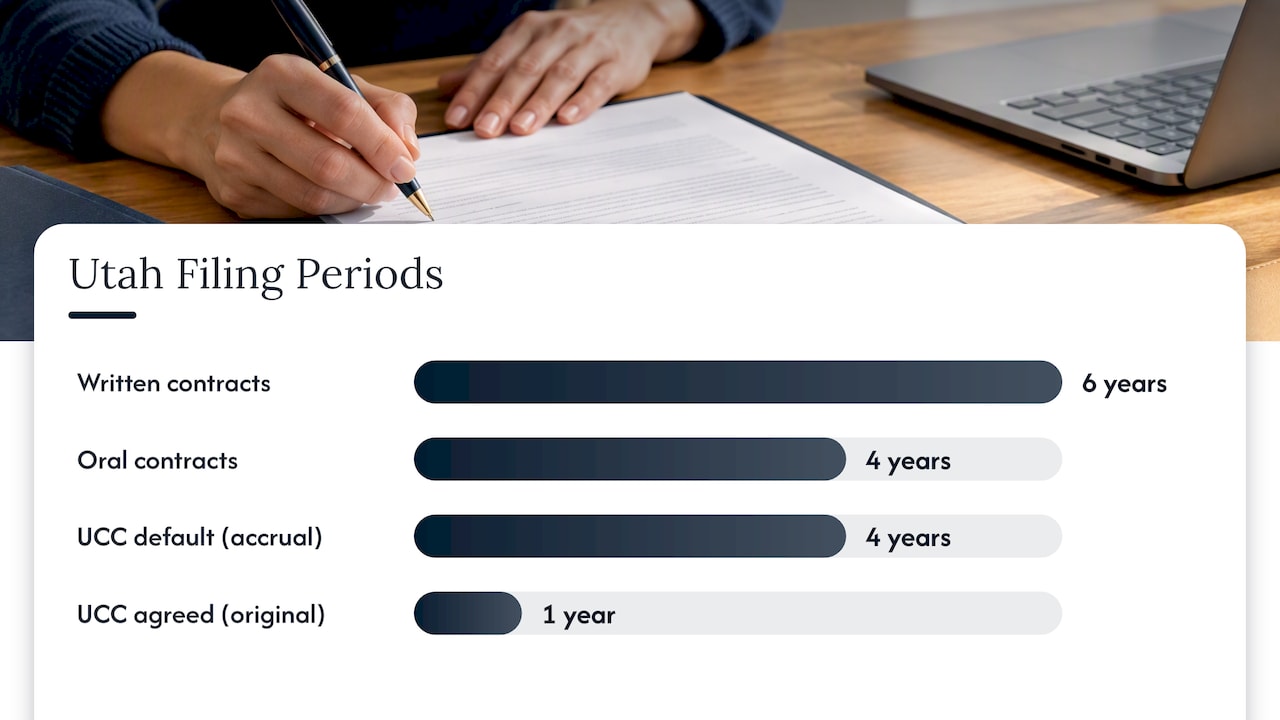
For most written contracts in Utah, the filing period is commonly cited as six years under Utah Code 78B-2-309, and four years for oral contracts. Lease contracts governed by the Uniform Commercial Code are different: the default period is four years from when the cause of action accrues, and the parties may shorten it by agreement to as little as one year from the original lease contract. Many people miss that clause when they sign. Check your own agreement for a shortened period, and have an attorney confirm which statute governs your claim.
Interest
Unless a contract states a different rate, Utah’s legal interest rate for the contract is 10% per year. The same statute sets a separate calculation for judgments under $10,000 in actions about the purchase of goods and services. If your contract sets its own rate, that rate controls. Interest can add meaningful value over a long dispute, and it is separate from the liquidated sum itself.
Notice and cure
Many contracts require written notice of breach and a cure period before the clause applies. Missing that step can weaken a claim even when the breach is clear. A written demand is often the right first move, and our guide to a Utah demand letter and its timeline explains how one is structured.
A practical checklist before you sign
Whether you are the one who will be paid or the one who might owe, review these points:
- Identify the trigger. Exactly which breach activates the sum? A narrow trigger is easier to defend.
- Test the number. Can you explain, in a sentence, how the figure relates to the likely loss? If you cannot, expect a challenge.
- Check for stacking. Does the contract allow the fixed sum plus actual damages for the same harm? That combination invites a penalty argument.
- Look at the exclusivity language. Is the sum the only remedy for the breach, or one of several?
- Confirm notice and cure steps. Note the deadlines and how notice must be delivered.
- Find any shortened limitation period. In leases especially, it may be buried in the form.
- Keep records. Emails, invoices and project logs support or undercut a claim that the number was reasonable.
How we approach these disputes
We see these clauses from both sides. Some clients want to enforce a fixed sum they were promised. Others receive a demand for an amount that seems out of proportion to anything they did. The first step in both cases is the same: read the contract in full, then compare the clause with the facts.
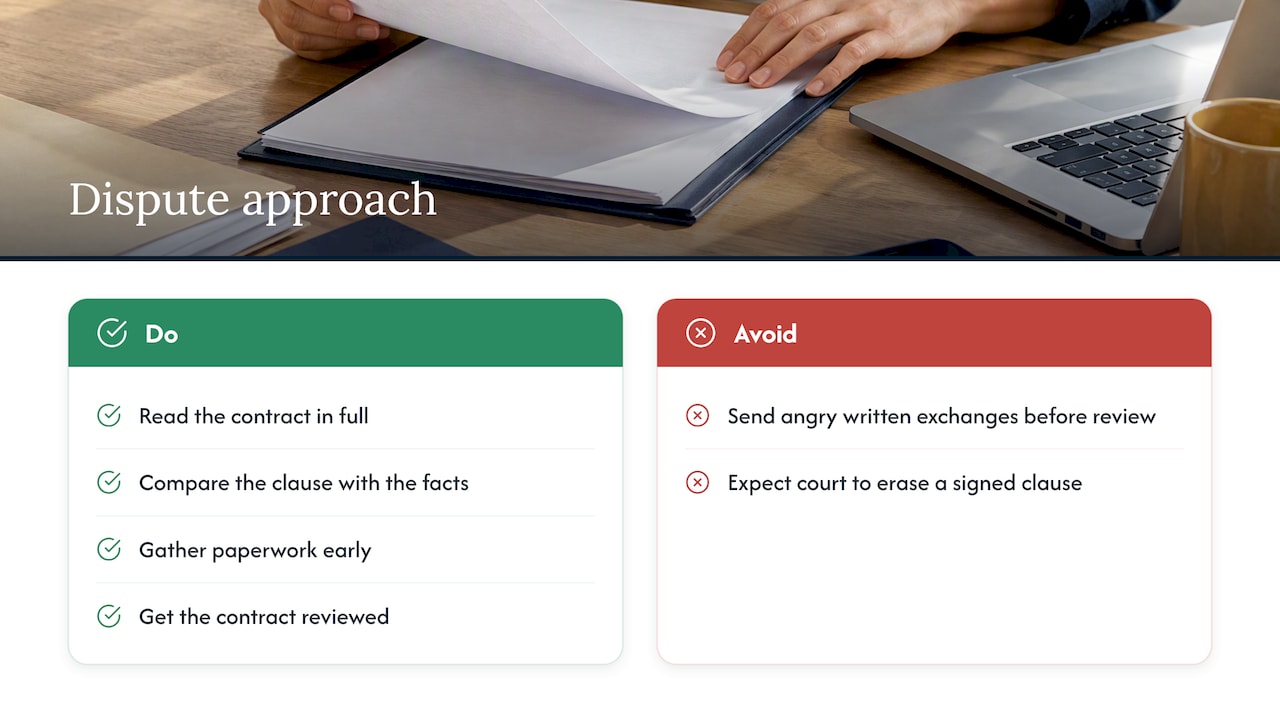
Our view is that most disputes are decided on documents. The person who can show how the figure was set, what notice was given and what loss followed is in the stronger position. We encourage clients to gather paperwork early and to avoid angry written exchanges before they have had the contract reviewed.
We also tell clients the hard part honestly. Because Utah starts from a presumption of enforceability, a client who signed a clause and breached should not count on a court to wipe it away. Sometimes the better path is a negotiated settlement that reflects the real exposure on each side. Where the clause truly operates as a penalty, we say so and build the challenge around the contract’s wording and the foreseeable loss.
— Paralegal
When to bring in a Utah attorney
Talk to an attorney before you act if any of these apply:
- You received a demand for a fixed sum and are deciding whether to pay, negotiate or contest it.
- You are about to sign a contract with a clause that sets a large payment for a breach.
- You want to enforce a clause and need to confirm notice, deadlines and the remedy.
- The contract includes a shortened time to sue, an arbitration clause, or an attorney fee provision.
Our team handles breach of contract, negotiation, enforcement and litigation for Utah individuals and small businesses. You can read about our contract disputes work in Salt Lake City or see all of our practice areas. We have worked with more than 1,300 clients and resolved over 1,200 cases, and we will tell you plainly where your contract stands.
FAQ
Are liquidated damages enforceable in Utah?
Generally, yes. Utah courts treat the clause like any other term and presume it is enforceable. The party challenging it must show it is unconscionable or an unenforceable penalty, or establish a standard defense such as fraud or duress.
What makes a liquidated damages clause a penalty in Utah?
A clause becomes a penalty when the amount bears no reasonable relationship to the actual or likely damage from the breach. Utah authority says clauses so disproportionate that they shock the conscience will be invalidated. The analysis depends on the facts at the time of contracting.
How long do I have to sue for breach of contract in Utah?
For most written contracts the period is commonly cited as six years, and four years for oral agreements. Lease contracts under the UCC default to four years, and the parties can shorten that to one year. Because the right period depends on the contract type, confirm it with an attorney as soon as a dispute arises.
Does interest apply on top of liquidated damages?
Separately, Utah’s legal interest rate is 10% per year unless the contract sets a different rate. Whether interest runs on a liquidated sum, and from what date, depends on the contract and the court. Ask an attorney to review that point before you calculate what you are owed or owe.
Sources
- Commercial Real Estate Investment, LC v. Comcast of Utah II, LLC (Utah Supreme Court, 2012)
- Warner v. Rasmussen (Utah Supreme Court, 1985)
- Woodhaven Apartments v. Washington (Utah Supreme Court, 1997)
- Reliance Insurance v. Utah Department of Transportation (Utah Supreme Court, 1993)
- Utah appellate brief on freedom of contract and mitigation
- Utah Code 70A-2a-506, limitation of actions for lease contracts
- Utah Code Title 15, Chapter 1, Interest
- Utah statute of limitations on written and oral contracts