
If you were hurt or lost property because of a Utah city, county, school district, state agency or one of their employees, you generally cannot sue until you first file a written notice of claim, and you have one year to do it. The notice must reach the right office, be signed, and contain specific information. A notice that misses on any of these can end the case before it starts. That is why people with an injury claim against a public body often bring in a Utah personal injury attorney before they file anything. You can see our Salt Lake City personal injury practice for how we approach these cases.
This guide explains the rule in plain terms: when a notice is required, the one-year clock, what to put in the notice, where it goes, how to deliver it, and what happens in the 60 days after.
TL;DR
- Under Utah Code § 63G-7-401, a claim against a governmental entity or its employee requires a written notice of claim before any lawsuit.
- The claim is barred unless the notice is filed within one year after the claim arises.
- The notice must be signed, state the facts, the nature of the claim and the damages so far as known, and go to the specific office the statute names for that type of entity.
- Utah courts require strict compliance. Sending it to the wrong office can defeat the claim even if the government knew about the incident.
- After filing, you must wait 60 days before suing, and the lawsuit itself must be filed within two years after the claim arises.
Table of Contents
- What a notice of claim is and when Utah requires one
- The one-year deadline and how it is counted
- What the notice must say
- Who must receive the notice
- How to deliver the notice and prove you did
- What happens after you file
- Why claims against public bodies benefit from an attorney
- Talk to us about your claim
- FAQ
- Sources
What a notice of claim is and when Utah requires one
A notice of claim is a formal written statement that tells a public body you have a claim against it and gives it a chance to investigate and respond before a court gets involved. Utah’s Governmental Immunity Act sets the rules. It covers claims against governmental entities and against their employees for acts or omissions in the course of their duties.
The statute is broad. Section 63G-7-401(3) says anyone with a claim against a governmental entity, or against its employee for conduct during the performance of duties, within the scope of employment, or under color of authority, must file a written notice with the entity before maintaining an action. It applies whether or not the function is labeled governmental.
In practice, that means situations such as:
- A fall on a poorly maintained city sidewalk or in a county building.
- A crash involving a city vehicle or a public school bus.
- Property damage caused by a public works crew.
- An injury at a public facility run by a special district.
If you were hurt in a fall and the property is public, our guide on what to do after a Utah slip and fall covers the evidence to preserve alongside the notice.
Contract claims work differently
If your dispute is about a contract with a public body, the notice rules may not apply. The Governmental Immunity Act states that actions arising out of contractual rights or obligations are not subject to the notice-of-claim requirements in sections 401, 402, 403 or 601. Contract disputes still have their own deadlines and procedures, and our firm represents clients in breach of contract, negotiation, enforcement and litigation matters. The deadline for a contract claim is a different question from the one-year notice rule, so do not assume either way without having the contract reviewed.
Who this guide is for
This page is for people with a claim against a Utah public body or public employee, most often an injury or property claim. Workers’ compensation claims run through a separate process, covered in our guide to filing Utah workers’ comp claims. Immigration, family law and criminal matters are not governed by the notice-of-claim rule.
The one-year deadline and how it is counted
The core rule is in Utah Code § 63G-7-402: a claim against a governmental entity or employee is barred unless the notice is filed according to § 63G-7-401 within one year after the claim arises.
Two points decide most disputes about the clock.
When a claim “arises.” Under § 63G-7-401(2), a claim arises when the statute of limitations that would apply against a private person begins to run. The clock does not start until you knew, or with reasonable diligence should have known, both that you had a claim and who the responsible entity or employee was. The burden of proving reasonable diligence is on you.
What “should have known” means in practice. In Amundsen v. University of Utah (2019 UT 49), the Utah Supreme Court held the one-year period began when the claimant knew or, with reasonable diligence, should have known of the claim and the entity’s identity. The plaintiff had been seen at a University clinic and received billing on University letterhead, but did nothing to look into the doctor’s employment status. The notice, filed in 2016 for services no later than 2013, came too late and the dismissal was affirmed.
The lesson is not to wait for certainty. If there is any chance a public entity is involved, start the one-year count from the incident date and treat that as your working deadline.
A worked example
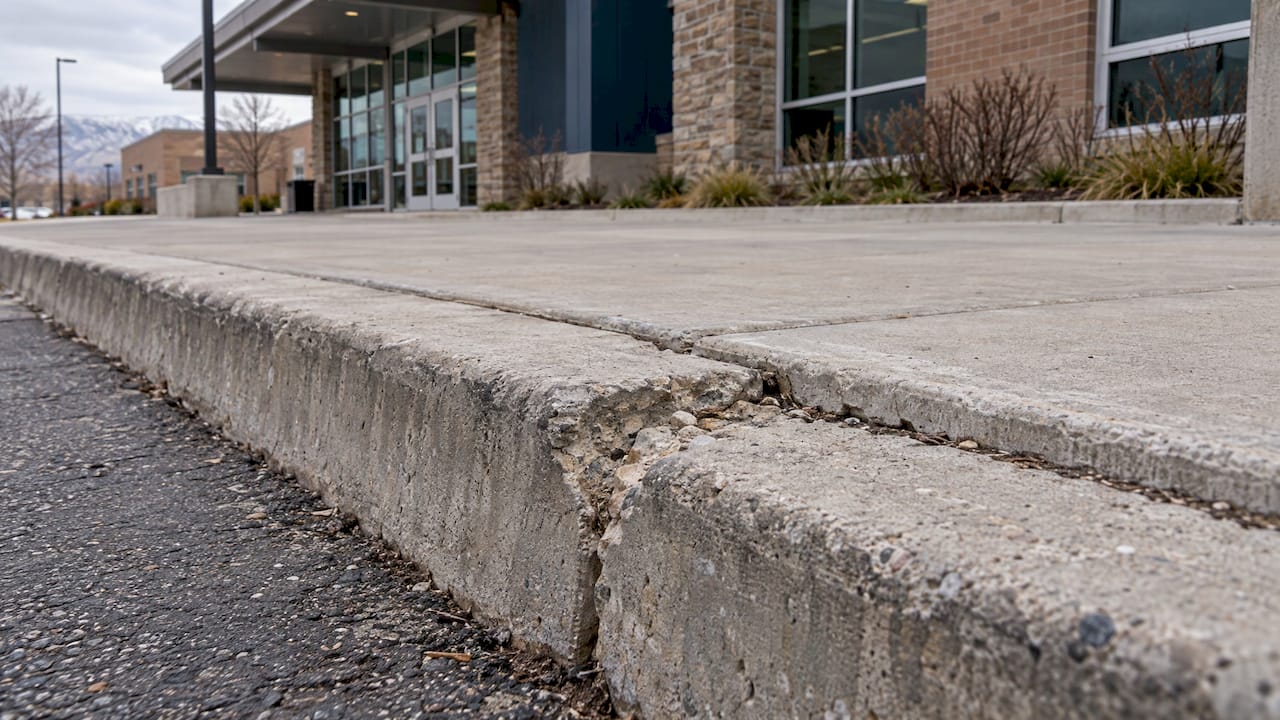
Suppose you trip on a broken curb outside a city-run recreation center on March 3. Your working deadline for filing a notice with the right city office is March 3 of the following year. If you file on month eleven, you have used your time well. If you spend the year recovering and filing only after the anniversary, the claim is barred under § 63G-7-402, no matter how strong the facts are. This example is illustrative; your own dates depend on your facts, which is one reason we recommend a case review early.
What the notice must say
Section 63G-7-401(4)(a) requires four things:
- A brief statement of the facts.
- The nature of the claim asserted.
- The damages incurred so far as known.
- If you are pursuing a government employee individually, that employee’s name.
The notice must also be signed by you or by your agent, attorney, parent or legal guardian.
Local entities add practical requirements. Salt Lake County’s notice-of-claim procedure asks for a dated notice with an original signature, says copies or facsimiles are not acceptable, and requests supporting evidence such as police reports, witness statements, photographs and estimates. The County acknowledges proper filing by letter. The City of Magna’s 2025 claim procedure states that its form is optional, that an unsigned form does not comply with § 63G-7-401, and that an adjuster is assigned after receipt. Magna also notes that supporting documents can be attached or submitted later, and that you are responsible for mitigating your damages after filing.
Writing the facts and damages sections
“Brief” does not mean vague. Include:
- The date, time and exact location of the incident.
- What happened, in order, in neutral terms.
- The public entity and any employee involved.
- The injuries and losses you know of so far, such as medical bills, lost wages or repair estimates.
The statute asks for damages “so far as known,” so you are not expected to have a final number while treatment continues. Keep the statement factual. Do not guess at fault or speculate about things you cannot confirm, and avoid giving a recorded account that differs from your medical records or police report. Medical bills often come with liens attached, which affect what you eventually keep; our page on Utah medical liens explains the filing steps.
Who must receive the notice
This is where claims are lost most often. The statute names the recipient by type of entity. Under § 63G-7-401, the notice goes to:
| Type of entity | Where the notice goes |
|---|---|
| City or town | Office of the city or town clerk |
| County | Office of the county clerk |
| School district | Superintendent or business administrator |
| Special district | Presiding officer, secretary or clerk |
| State | Attorney general |
| Other public bodies | A member of the governing board, the executive director or the executive secretary |
A notice may also go to an authorized agent of the entity.
Courts take this seriously. A 2021 Tenth Circuit opinion held that compliance with the Act’s notice requirement is a prerequisite to jurisdiction, that a claim against a city must be sent to the city clerk, and that the entity’s actual knowledge of the incident does not excuse strict compliance.
In Davis v. Central Utah Counseling Center, the plaintiff sent notice to the Attorney General and the county clerk instead of a member of the interlocal agency’s governing board, executive director or executive secretary. The Utah Supreme Court refused to excuse the error, reaffirming that strict compliance is required and that relying on inferences and assumptions is not due diligence. The court reasoned that the government may set the terms on which it waives immunity, so confusing bureaucracy or even misdirection does not relax the rule.
Finding the right office
The Utah State Bar’s paralegal materials point to the Division of Corporations’ governmental entity index as a way to identify the proper recipient. Since the 2025 amendments, entities are also required to file and update statements listing their notice and service information. Confirm the entity’s exact legal identity first, because a hospital, a school, a transit agency and a city can each be a separate public body with a different recipient.
How to deliver the notice and prove you did
Since July 1, 2025, § 63G-7-401(4)©-(d) allows three methods: hand delivery, mail under § 68-3-8.5, or email to the address in the entity’s filed statement. An emailed notice must also be sent at the same time to the attorney representing the entity. The 2025 amendment, Chapter 326 of the General Session, also limits challenges to certain misdirected notices. Do not treat that as a safety net; deliver to the named office.
For proof, the Utah State Bar’s materials explain that a mailed notice is considered filed when the post office stamps it, and that the practical way to document it is certified mail with return receipt requested. Keep:
- A complete copy of the signed notice and every attachment.
- The certified mail receipt and the return receipt, or the hand-delivery stamp.
- For email, the sent message with its recipients and timestamp, including the copy to the entity’s attorney.
- Any acknowledgment letter the entity sends back.
Tracking and keeping delivery records is the same discipline that applies when you document a claim with a carrier, as in this lost package claims guide, which covers required contents, signatures, recipients and delivery methods for those filings. For a government claim, the stakes are much higher, so keep the paper trail from day one.
What happens after you file
The notice starts a waiting period, not a lawsuit. Under § 63G-7-403:
- Within 60 days after you file, the entity, its representative or its insurance carrier must confirm receipt in writing and say if it believes it is not the correct entity.
- You may not file a lawsuit until 60 days after the notice is filed.
- You must start the district court action within two years after the claim arises.
- If a timely action fails or is dismissed for a reason other than the merits, the statute allows a one-time refiling within one year.
So there are two clocks: one year to file the notice, and two years from the date the claim arises to file the lawsuit. Calendar both on the day of the incident. Do not use the 60-day wait as downtime. Keep treating, keep your records, and keep photographs and witness details current.
The cost of getting it wrong
A late or non-compliant notice does not usually lead to a second chance. The claim is barred under § 63G-7-402, and the cases above show courts treating the notice rules as jurisdictional. A wrong recipient, a missing signature or a missed anniversary can end a claim that would otherwise have been worth pursuing.
Why claims against public bodies benefit from an attorney
The notice itself is short. The hard part is everything around it: identifying which entity is responsible, finding its current recipient, counting from the right date, describing the claim without hurting it later, and preparing for the lawsuit that follows. Related situations bring their own deadlines too, such as a death caused by a public entity’s negligence, which our page on Utah wrongful death claims explains, and slip and fall injuries under Utah slip and fall law.
Our perspective
We see a notice of claim as the first piece of the case, not a form to get out of the way. It fixes the facts you commit to, sets the damages narrative, and decides whether the claim survives at all. Utah’s courts have been clear that strict compliance is the standard, so we treat the recipient, the signature, the delivery method and the date with the same care we give the rest of the case.
Our firm has served more than 1,300 clients and resolved more than 1,200 cases, and our approach is client-centered: we explain each step in plain language, respond when you reach out, and build a strategy around the outcome you want. For injured people dealing with a public entity, that means we start with the one-year deadline, confirm who must receive the notice, and keep the case organized for the two-year filing deadline that follows.
If you were hurt and a public body may be involved, call us early. The sooner the dates are mapped, the more options you keep.
Paralegal
Talk to us about your claim
Our Utah attorneys handle personal injury, workers’ compensation, family law, criminal defense, bankruptcy, immigration and contract disputes. If your injury involves a city, county, school or other public body, our personal injury team in Salt Lake City can review your facts and your dates. You can also read how contingency fee personal injury representation works, or see all of our practice areas.

FAQ
Do I need a notice of claim if I am suing a Utah city?
Yes, in general. Utah Code § 63G-7-401 requires a written notice of claim with the entity before you maintain an action against a governmental entity or its employee. For a city, the notice goes to the city or town clerk’s office. Contract-based claims are treated differently under the Act.
What is the deadline for a Utah notice of claim?
The notice must be filed within one year after the claim arises, or the claim is barred under § 63G-7-402. The year runs from when the claim arises, which depends on when you knew or reasonably should have known about the claim and the entity involved. Treat the incident date as your working deadline.
Can I email the notice?
Since July 1, 2025, the statute allows email delivery to the address in the entity’s filed statement. You must also send a copy at the same time to the attorney representing the entity. Hand delivery and mail are also allowed, and certified mail with a return receipt gives you proof of filing.
How long before I can file a lawsuit?
You cannot file until 60 days after the notice is filed. The entity has 60 days to confirm receipt in writing, and you must file the district court action within two years after the claim arises, according to § 63G-7-403.
What if the government already knows about my accident?
Actual knowledge does not replace the notice. The Tenth Circuit held that an entity’s actual notice does not excuse a claimant from strictly complying with the Act. File the written notice with the correct office.
Sources
- Utah Code § 63G-7-401, notice of claim
- Utah Code § 63G-7-402, time for filing notice
- Utah Code § 63G-7-403, action after notice
- Governmental Immunity Act of Utah, Chapter 7
- Amundsen v. University of Utah, 2019 UT 49
- Davis v. Central Utah Counseling Center, Utah Supreme Court
- Tenth Circuit opinion, August 16, 2021
- Salt Lake County notice of claim procedure
- City of Magna procedure for filing a claim, 2025
- Utah State Bar paralegal materials on pre-litigation process